Multidimensional Security: From Abu Dhabi Talks to Cyber Threats and Hybrid Warfare
An analysis of modern security challenges, covering diplomatic efforts in the Middle East, AI-driven cyber threats, and hybrid warfare in Europe.
Key points
- Diplomatic efforts in Abu Dhabi are focused on humanitarian issues.
- Artificial intelligence is becoming a key vector for cyber threats in the EU.
- Poland remains the primary target of Russian hybrid attacks.
- Infrastructure adaptation is a requirement of wartime.
The Security Context
The concept of 'security' in 2024 has taken on a global dimension, encompassing both traditional military threats and emerging technological challenges. At the center of attention are the talks in Abu Dhabi involving Ukraine, the US, and Russia, where humanitarian issues, prisoner exchanges, and security guarantee mechanisms are being discussed. This indicates an attempt to find diplomatic pathways to de-escalation amidst ongoing hostilities.
Hybrid Challenges and Cyberspace
Europe is facing an unprecedented level of hybrid aggression. Poland has become the primary target of sabotage and diversionary acts, which are part of a broader strategy to destabilize NATO. At the same time, the EU Agency for Cybersecurity (ENISA) warns that artificial intelligence is significantly accelerating the speed of cyberattacks, making critical infrastructure more vulnerable. The European Commission is already responding by limiting the circle of partners in critical technology sectors due to security risks associated with global players like Nvidia.
Local and Regional Dimensions
Security also has a practical dimension. In the Cherkasy region, farmers are adopting grain storage technologies in polymer sleeves, adapting to wartime risks. However, in the Chernihiv region, the real threat of landmines continues to claim civilian lives. Meanwhile, in the Middle East, Gulf states are strengthening their collective defense by establishing a joint military command post in Kuwait, while the US is redeploying aircraft due to rising tensions with Iran.
What's Next?
The effectiveness of the Abu Dhabi negotiations remains a key factor. While it is unknown whether these consultations will lead to tangible security guarantees, they are an indicator of the parties' willingness to engage in dialogue. It is important to watch how the EU will adapt its legislation to AI challenges and how NATO will respond to hybrid threats on the eastern flank.
Key Facts
- Trilateral consultations (Ukraine, US, Russia) on security and prisoners are ongoing in Abu Dhabi.
- Poland is recording a surge in sabotage, viewed as a tool of hybrid warfare.
- ENISA warns that AI significantly shortens the time window for cyberattacks.
FAQ
- Why are the Abu Dhabi talks important? It is an attempt to involve the US as a guarantor in prisoner exchanges and security matters.
- How does AI impact security? It allows hackers to identify and exploit system vulnerabilities much faster.
- What are the risks for civilians today? Besides direct combat, landmine hazards and sabotage threats remain critical.
Read next
 🇺🇦Ukraine
Ukrainian defense industry produces over half of artillery shells for the front
Rheinmetall CEO Armin Papperger stated that Ukrainian facilities now manufacture more than 50% of the artillery ammunition used by the Defense Forces.
 🇺🇦Ukraine
Russian army attacks Kremenchuk with drones: casualties include children
On the evening of November 27, Russian forces launched a drone strike on Kremenchuk in the Poltava region. Four civilians were injured, including three children.
 ⚖️Law & Anti-corruption
NABU Director Semen Kryvonos responds to criticism over skipping parliamentary commission hearings
Semen Kryvonos explained his absence from the Verkhovna Rada's temporary investigative commission hearings by citing foreign business trips and alleged pressure on anti-c…
 🇪🇺Europe & EU
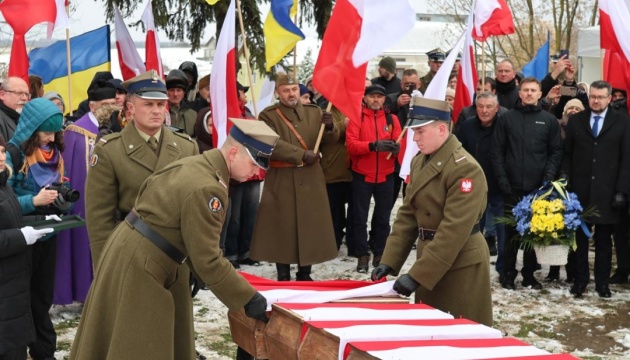
Remains of Polish Army soldiers killed in 1939 reburied in Lviv region
A ceremony was held in the Lviv region to rebury 115 Polish Army soldiers who died during the 1939 defense of Lviv.
 🇪🇺Europe & EU
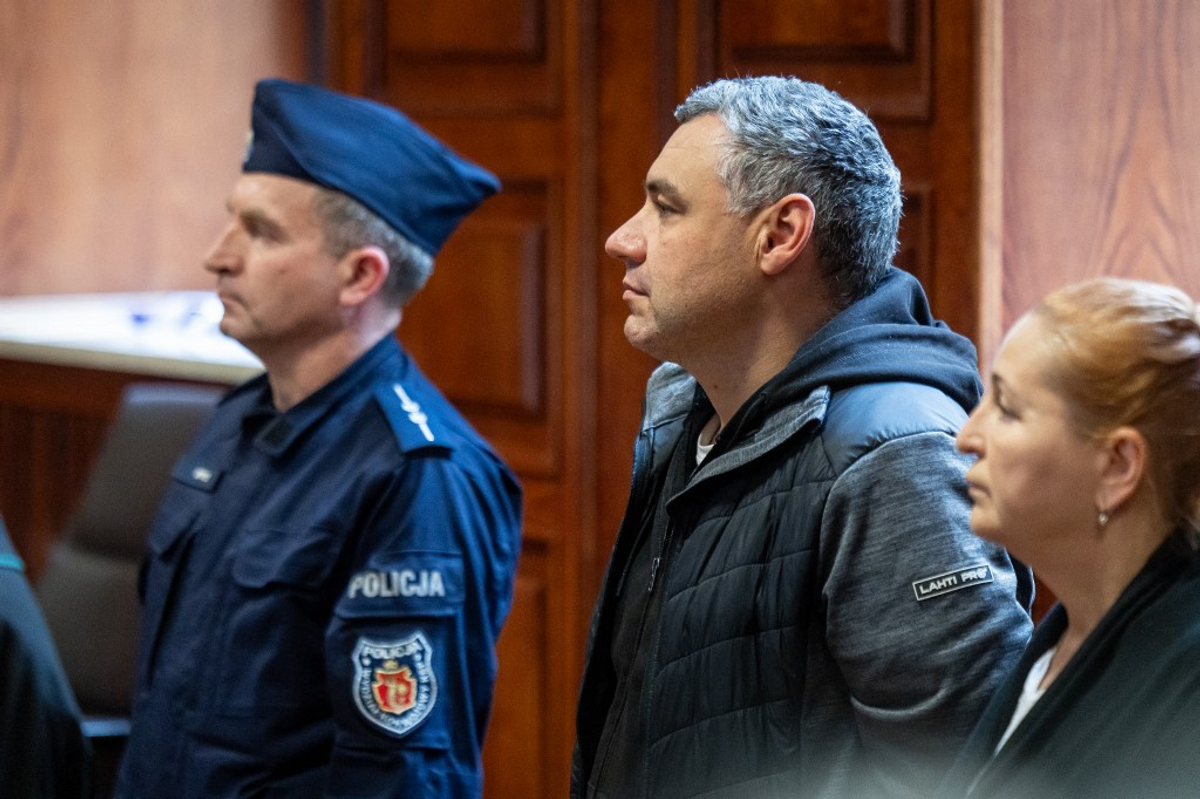
Croatian Court Overturns Extradition of Nord Stream Sabotage Suspect to Germany
Croatia’s High Criminal Court has ordered a retrial for Ukrainian diver Volodymyr Zhuravlov, who is wanted by Germany over the 2022 Nord Stream pipeline blasts.
 🛡️War & Security
General Staff: 134 combat engagements recorded on the frontline
On November 27, Russian forces conducted over 130 attacks, utilizing massive drone strikes and aerial bombardments.