Deterrence Mechanisms: US General Explains NATO's Response to Potential Russian Aggression
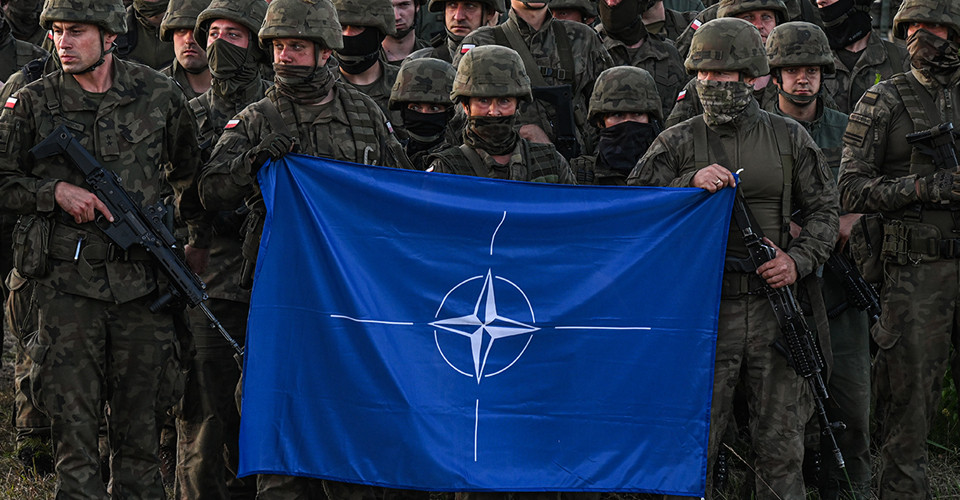
Retired US Army Major General Gordon Davis detailed NATO's defense strategy on the eastern flank, explaining the inevitability of a collective response in the event of a Russian attack.
 🧠AI Analysis
Photo: Еспресо
Key points
- NATO's presence in Estonia ensures immediate allied involvement in any conflict.
- The right to self-defense allows for a military response prior to official Article 5 activation.
- Intelligence can detect invasion preparations early, eliminating the element of surprise.
The North Atlantic Alliance possesses clear response mechanisms to potential Russian aggression that allow for the involvement of allied forces even before the official activation of Article 5 of the Washington Treaty. This was stated by Gordon "Skip" Davis Jr., a retired US Army Major General and former NATO Deputy Assistant Secretary General.
Multinational "Tripwire" on the Eastern Flank
According to the general, the presence of multinational battle groups in the Baltic states, specifically in Estonia, is a key deterrence factor. In the event of an attack, these units—comprising military personnel from seven countries under UK leadership—would inevitably find themselves in the combat zone. Davis emphasized that military units have the right to self-defense, ensuring an immediate counter-strike against any aggressor.
"If Russian troops attack these units, a response will be given by all countries whose military personnel are stationed there," the expert noted.
The Impossibility of a Sudden Land Grab
General Davis expressed confidence that a "lightning-fast" seizure of NATO territory is highly unlikely. Modern intelligence capabilities allow for the detection of preparations for a ground invasion days or at least hours in advance. This would enable the Alliance to put forces on high alert and occupy defensive positions ahead of time.
He further added that NATO has established defense plans and the authority for rapid deployment of additional forces. Consequently, any Russian attempt to forcibly alter borders would meet a powerful and consolidated response from the international coalition, making the cost of aggression unacceptably high for the Kremlin.
Source Еспресо — espreso.tv/news-vidpovid-alyansu-bude-potuzhnoyu-general-ssha-devis-poy… ↗
Read next
 🛡️War & Security
Russian command threatens officers with assault duty due to falsified frontline reports
Due to discrepancies between the actual situation on the Zaporizhzhia front and reports submitted to senior leadership, Russian officers are facing threats of being sent …
 ⚖️Law & Anti-corruption
Estonian Supreme Court bans smartphone voting for elections
The Estonian Supreme Court has blocked plans to introduce mobile voting apps, citing cybersecurity risks and the lack of state control over private app stores.
 🇺🇦Ukraine
Ukrainian defense industry produces over half of artillery shells for the front
Rheinmetall CEO Armin Papperger stated that Ukrainian facilities now manufacture more than 50% of the artillery ammunition used by the Defense Forces.
 🌍World
China tests new landing tactics against Taiwan: satellites spot 800-meter floating bridge
Chinese military forces conducted drills in Fujian province, testing the construction of an 800-meter floating bridge using civilian vessels to transport heavy equipment.
 🇺🇦Ukraine
Russian army attacks Kremenchuk with drones: casualties include children
On the evening of November 27, Russian forces launched a drone strike on Kremenchuk in the Poltava region. Four civilians were injured, including three children.
 ⚖️Law & Anti-corruption
NABU Director Semen Kryvonos responds to criticism over skipping parliamentary commission hearings
Semen Kryvonos explained his absence from the Verkhovna Rada's temporary investigative commission hearings by citing foreign business trips and alleged pressure on anti-c…