The Woman Who Invited Rome? Archaeologist Challenges Gender of British Ruler Verica
A provocative new theory suggests that Verica, the tribal leader who prompted the Roman invasion of Britain in 43 AD, was actually a queen.
 🌍World
Photo: УНІАН
Key points
- Dr. Miles Russell suggests Verica, a key Roman ally, was a queen.
- Evidence includes female-coded imagery on coins and linguistic patterns.
- Critics argue that contemporary Roman accounts and anatomical details on coins favor a male identity.
The Roman conquest of Britain in 43 AD, a defining moment in Western history, may have been triggered by a woman rather than a king. Dr. Miles Russell, a leading archaeologist at Bournemouth University, has proposed that Verica, the ruler of the Atrebates tribe who appealed to Emperor Claudius for military aid, was female. This finding could fundamentally alter the political narrative of Iron Age Britain.
Evidence from Coins and Language
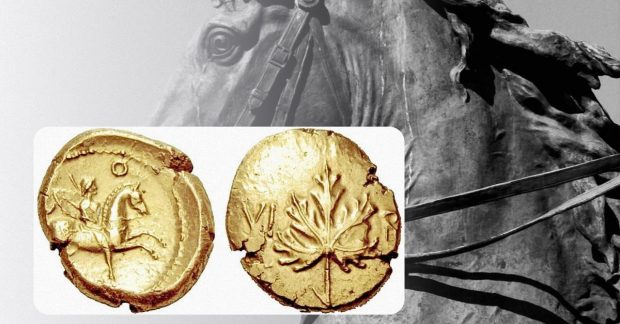
Verica was a Romanized Briton who fled to Rome after being ousted by rival tribes. Dr. Russell argues that the Latin name ending in "a" is a strong indicator of female gender. Furthermore, he points to numismatic evidence: coins minted under Verica feature a naked female rider, whereas coins from contemporary male rulers like Caratacus show distinctly male figures.
The study also re-examines the title "Rex" found on these coins. Russell suggests that in the late 1st century BC and early 1st century AD, Rome used this term for influential allies regardless of gender. He also notes that Roman historian Dio Cassius famously criticized Emperor Claudius for being easily swayed by the influence of women and slaves, which might align with Verica's role in the invasion.
Academic Skepticism
The theory has met with significant pushback from other experts. Professor Roger Tomlin of Oxford University argues that Dio Cassius explicitly referred to Verica as a man. He also notes that several male Latin names end in "a" and that the figures on coins often represent deities rather than portraits of the monarchs themselves.
Dr. Daphne Nash Briggs, an expert on Iron Age coinage, also expressed skepticism, pointing to coins that appear to show Verica with an Adam's apple or in male priestly attire. Despite the controversy, Dr. Russell maintains that challenging long-held historical assumptions is vital for a clearer understanding of ancient power structures.
Source УНІАН — unian.ua/science/verika-mig-buti-zhinkoyu-arheolog-postaviv-pid-sum… ↗
Read next
 🛡️War & Security
Russian command threatens officers with assault duty due to falsified frontline reports
Due to discrepancies between the actual situation on the Zaporizhzhia front and reports submitted to senior leadership, Russian officers are facing threats of being sent …
 ⚖️Law & Anti-corruption
Estonian Supreme Court bans smartphone voting for elections
The Estonian Supreme Court has blocked plans to introduce mobile voting apps, citing cybersecurity risks and the lack of state control over private app stores.
 🇺🇦Ukraine
Ukrainian defense industry produces over half of artillery shells for the front
Rheinmetall CEO Armin Papperger stated that Ukrainian facilities now manufacture more than 50% of the artillery ammunition used by the Defense Forces.
 🇺🇦Ukraine
Russian army attacks Kremenchuk with drones: casualties include children
On the evening of November 27, Russian forces launched a drone strike on Kremenchuk in the Poltava region. Four civilians were injured, including three children.
 ⚖️Law & Anti-corruption
NABU Director Semen Kryvonos responds to criticism over skipping parliamentary commission hearings
Semen Kryvonos explained his absence from the Verkhovna Rada's temporary investigative commission hearings by citing foreign business trips and alleged pressure on anti-c…
 🇪🇺Europe & EU
Remains of Polish Army soldiers killed in 1939 reburied in Lviv region
A ceremony was held in the Lviv region to rebury 115 Polish Army soldiers who died during the 1939 defense of Lviv.