Putin ousts filmmaker Sokurov from human rights council as Moscow erases last vestiges of curated dissent
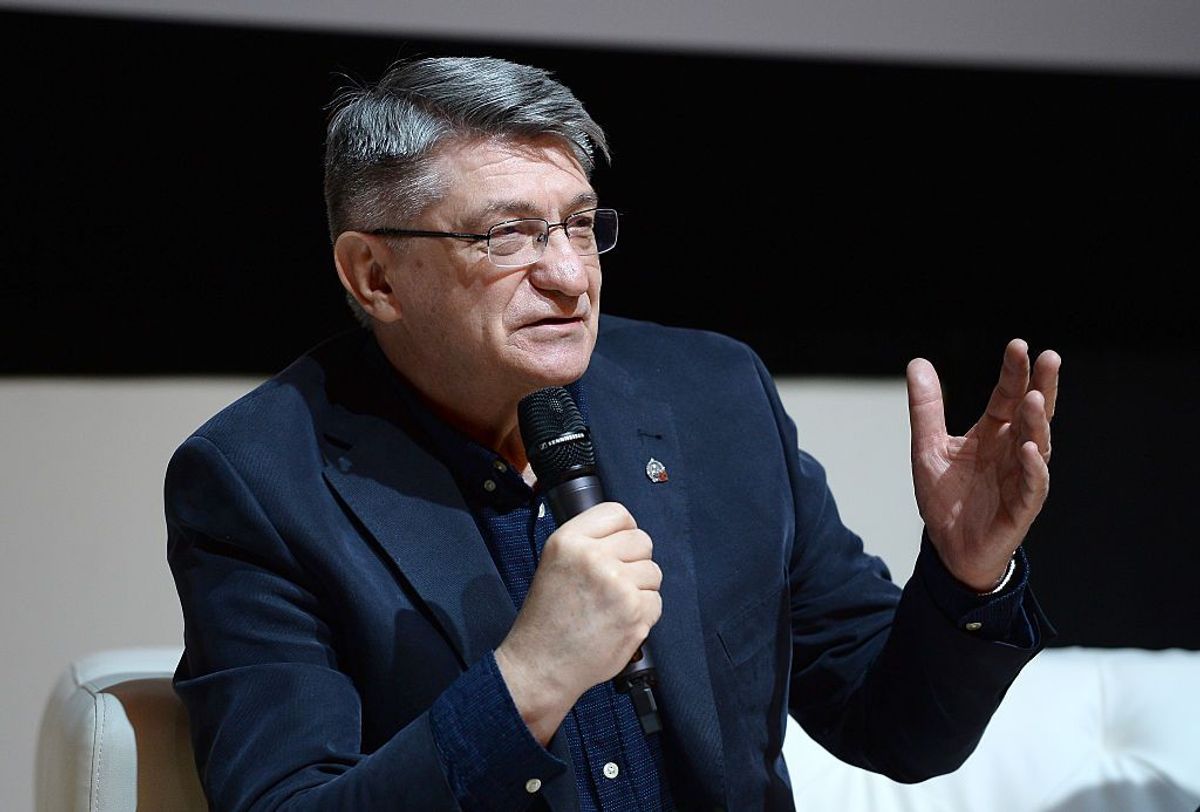
Russian President Vladimir Putin issued a decree removing filmmaker Alexander Sokurov from the advisory human rights council, replacing him with vocal supporters of the war.
 🌍World
Photo: Kyiv Independent
Key points
- Vladimir Putin removed filmmaker Alexander Sokurov from the human rights advisory council.
- Sokurov had previously criticized the 'foreign agents' law and growing censorship.
- The council was replenished with figures openly supporting the war against Ukraine.
The Russian leadership continues its systematic crackdown on any remaining spaces for independent thought or controlled disagreement. On Nov. 24, Russian leader Vladimir Putin signed a decree ousting acclaimed filmmaker Alexander Sokurov from the Presidential Civil Society and Human Rights Council. This advisory body, whose members are hand-picked by the Kremlin, has long served as a decorative fixture meant to project a false image of pluralism.
The End of Simulated Pluralism
Alexander Sokurov had been a member of the council since 2018, occupying a unique position within Russia's cultural landscape following 2014. Unlike many peers who fled the country, he chose not to go into exile, yet he refrained from publicly endorsing the full-scale war against Ukraine. Previously, the director attempted to appeal for the release of Ukrainian filmmaker Oleh Sentsov, and in December 2025, he openly criticized the legislation targeting so-called "foreign agents," labeling the designation both terrifying and humiliating.
At the same time, Sokurov faced mounting obstacles in his own professional endeavors, with the Culture Ministry repeatedly denying distribution certificates to his films and barring them from local festivals since 2022. Putin's recent decree also removed several other moderate figures, replacing them with individuals who have explicitly championed the invasion of Ukraine or operated in occupied Ukrainian territories.
"The reshuffle signals that the Kremlin is no longer willing to tolerate even the theater of dissent that once allowed isolated figures to speak out," analysts note.
This development highlights the ongoing transformation of Russia's political system into an uncompromising autocratic model where dissenting voices, no matter how mild or loyal, are completely excised from official structures. The move underscores the tightening grip of state censorship over all aspects of public and cultural life.
Source Kyiv Independent — kyivindependent.com/putin-ousts-filmmaker-from-token-human-rights-counc… ↗
Read next
 🛡️War & Security
Russian command threatens officers with assault duty due to falsified frontline reports
Due to discrepancies between the actual situation on the Zaporizhzhia front and reports submitted to senior leadership, Russian officers are facing threats of being sent …
 ⚖️Law & Anti-corruption
Estonian Supreme Court bans smartphone voting for elections
The Estonian Supreme Court has blocked plans to introduce mobile voting apps, citing cybersecurity risks and the lack of state control over private app stores.
 🇺🇦Ukraine
Ukrainian defense industry produces over half of artillery shells for the front
Rheinmetall CEO Armin Papperger stated that Ukrainian facilities now manufacture more than 50% of the artillery ammunition used by the Defense Forces.
 🇺🇦Ukraine
Russian army attacks Kremenchuk with drones: casualties include children
On the evening of November 27, Russian forces launched a drone strike on Kremenchuk in the Poltava region. Four civilians were injured, including three children.
 ⚖️Law & Anti-corruption
NABU Director Semen Kryvonos responds to criticism over skipping parliamentary commission hearings
Semen Kryvonos explained his absence from the Verkhovna Rada's temporary investigative commission hearings by citing foreign business trips and alleged pressure on anti-c…
 🇪🇺Europe & EU
Remains of Polish Army soldiers killed in 1939 reburied in Lviv region
A ceremony was held in the Lviv region to rebury 115 Polish Army soldiers who died during the 1939 defense of Lviv.