Oxford Returns Naga Ancestral Remains to India in Landmark Decolonization Move
The Pitt Rivers Museum has repatriated 39 skeletal remains to the Naga community, marking India's first-ever return of ancestral remains from a Western institution after 80 years.
 🌍World
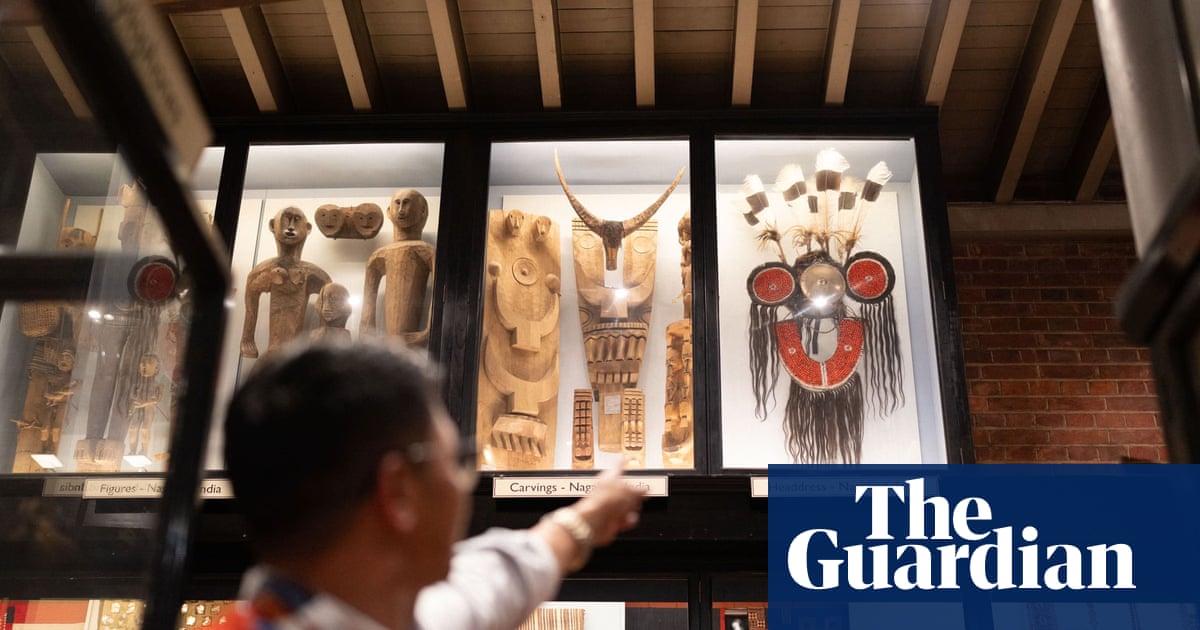
Photo: The Guardian — World
Key points
- Oxford's Pitt Rivers Museum returned 39 Naga skeletal remains to India.
- This is the first repatriation of human remains to India from a major Western museum.
- The process was community-led due to a lack of national repatriation policies in India.
After eight decades at Oxford University, the ancestral remains of the Naga people are finally returning home to India. The Pitt Rivers Museum, one of the world's leading ethnographic institutions, has officially handed over custodianship of 39 skeletal remains to a delegation of Naga leaders and scholars. This landmark decision follows six years of intense consultations and community-led negotiations aimed at addressing Britain's colonial legacy.
Colonial Legacy and the Journey Home
The remains were taken from Nagaland between 1910 and 1940 by British colonial administrators John Henry Hutton and James Philip Mills. For years, they were displayed on glass shelves, a practice that eventually triggered an ethical review. The repatriation process was set in motion in 2020 by Naga anthropologist Dolly Kikon. The returned remains include those of two children, a woman, and a village chief.
Museum Director Laura Van Broekhoven acknowledged the "long journey" toward reconciliation and healing. The museum had previously faced criticism for displays, such as the shrunken heads (tsantsa) of the Shuar people, which were found to reinforce racist stereotypes. Naga academics have also challenged colonial narratives, noting that many remains were acquired under duress during British expeditions rather than solely through local traditions.
Legal Precedents and Future Restitution
Unlike countries like the US or Australia, India lacks national laws governing the repatriation of Indigenous ancestral remains. This made the process unprecedented, requiring the Forum for Naga Reconciliation and the volunteer group RRaD to build community consensus from the ground up. The effort focused on healing rather than just legal procedure.
While the return of the 39 remains is a significant milestone, the Pitt Rivers Museum still holds approximately 6,500 Naga objects, including weapons and musical instruments. The issue of cultural restitution remains a sensitive point in UK-India relations, particularly regarding the Koh-i-noor diamond, which many in India view as a symbol of colonial plunder that has yet to be addressed.
Source The Guardian — World — theguardian.com/world/2026/nov/23/this-is-india-pitt-rivers-museum-… ↗
Read next
 🇺🇦Ukraine
Ukrainian defense industry produces over half of artillery shells for the front
Rheinmetall CEO Armin Papperger stated that Ukrainian facilities now manufacture more than 50% of the artillery ammunition used by the Defense Forces.
 🇺🇦Ukraine
Russian army attacks Kremenchuk with drones: casualties include children
On the evening of November 27, Russian forces launched a drone strike on Kremenchuk in the Poltava region. Four civilians were injured, including three children.
 ⚖️Law & Anti-corruption
NABU Director Semen Kryvonos responds to criticism over skipping parliamentary commission hearings
Semen Kryvonos explained his absence from the Verkhovna Rada's temporary investigative commission hearings by citing foreign business trips and alleged pressure on anti-c…
 🇪🇺Europe & EU
Remains of Polish Army soldiers killed in 1939 reburied in Lviv region
A ceremony was held in the Lviv region to rebury 115 Polish Army soldiers who died during the 1939 defense of Lviv.
 🇪🇺Europe & EU
Croatian Court Overturns Extradition of Nord Stream Sabotage Suspect to Germany
Croatia’s High Criminal Court has ordered a retrial for Ukrainian diver Volodymyr Zhuravlov, who is wanted by Germany over the 2022 Nord Stream pipeline blasts.
 🛡️War & Security
General Staff: 134 combat engagements recorded on the frontline
On November 27, Russian forces conducted over 130 attacks, utilizing massive drone strikes and aerial bombardments.