The Litvinenko Case: How Polonium Poisoning Changed the Perception of the Russian Regime
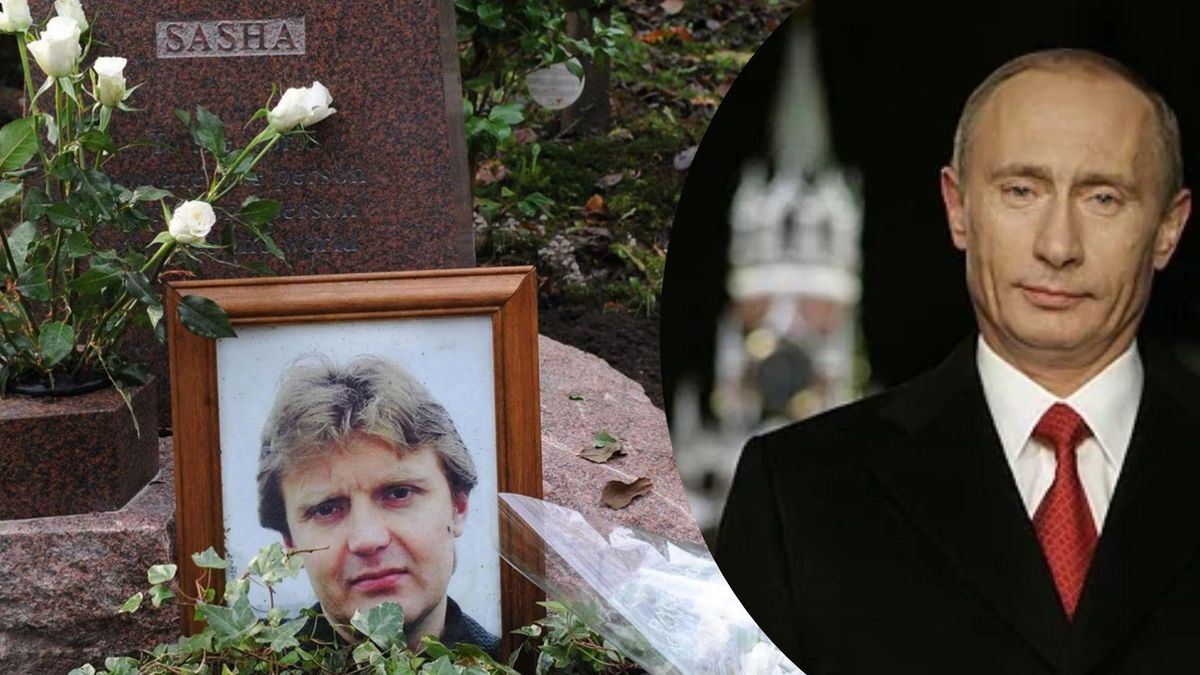
On November 23, 2006, former FSB officer Alexander Litvinenko died in London after being poisoned with radioactive polonium-210.
 🌍World
Photo: 24 Канал
Key points
- Death by polonium-210 as an act of state terrorism
- Investigation pointed to the involvement of Russia's top leadership
- Radioactive trail detected across multiple European countries
Nineteen years ago, the world witnessed an unprecedented act of nuclear terrorism in the heart of the British capital. Alexander Litvinenko, a former Russian intelligence officer who had been granted political asylum in the United Kingdom, died in a hospital after a rare isotope, polonium-210, was introduced into his body.
A Spy Thriller with Lethal Consequences
The incident occurred on November 1, 2006, during a meeting between Litvinenko and Andrei Lugovoi and Dmitry Kovtun at the Millennium Hotel. Investigators determined that the radioactive substance had been added to his tea. The choice of polonium-210, which emits alpha particles, indicated a high level of sophistication and access to state-level nuclear reactor resources.
The investigative trail stretched across Europe: radiation traces were found on British Airways flights, in Hamburg hotels, and at London stadiums. This was the first time that state-sponsored terrorism threatened the safety of civilians in a major European metropolis.
In his deathbed statement, Litvinenko directly accused the Kremlin leadership of the assassination, whom he had previously exposed for corruption and involvement in the 1999 apartment building bombings.
Source 24 Канал — 24tv.ua/vbivstvo-litvinenka-yak-chay-iz-poloniyem-londoni-nazavzhdi-zmi… ↗
Read next
 🛡️War & Security
Russian command threatens officers with assault duty due to falsified frontline reports
Due to discrepancies between the actual situation on the Zaporizhzhia front and reports submitted to senior leadership, Russian officers are facing threats of being sent …
 ⚖️Law & Anti-corruption
Estonian Supreme Court bans smartphone voting for elections
The Estonian Supreme Court has blocked plans to introduce mobile voting apps, citing cybersecurity risks and the lack of state control over private app stores.
 🇺🇦Ukraine
Ukrainian defense industry produces over half of artillery shells for the front
Rheinmetall CEO Armin Papperger stated that Ukrainian facilities now manufacture more than 50% of the artillery ammunition used by the Defense Forces.
 🇺🇦Ukraine
Russian army attacks Kremenchuk with drones: casualties include children
On the evening of November 27, Russian forces launched a drone strike on Kremenchuk in the Poltava region. Four civilians were injured, including three children.
 ⚖️Law & Anti-corruption
NABU Director Semen Kryvonos responds to criticism over skipping parliamentary commission hearings
Semen Kryvonos explained his absence from the Verkhovna Rada's temporary investigative commission hearings by citing foreign business trips and alleged pressure on anti-c…
 🇪🇺Europe & EU
Remains of Polish Army soldiers killed in 1939 reburied in Lviv region
A ceremony was held in the Lviv region to rebury 115 Polish Army soldiers who died during the 1939 defense of Lviv.