German far-right party Alternative for Germany calls for the return of millions of refugees
AfD co-leader Tino Chrupalla proposed sending back millions of Ukrainians, Syrians, and Afghans once security conditions improve in their home countries.
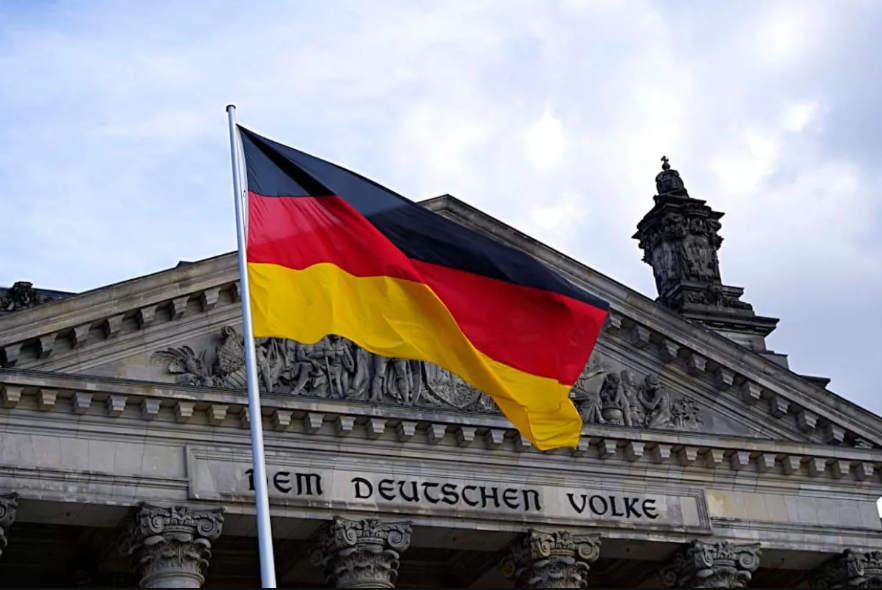 🌍World
Photo: Еспресо
Key points
- AfD co-leader calls for the return of 2.6 million refugees to their homelands
- Legal experts emphasize that mass deportations violate existing legal frameworks
- Individual status assessments remain mandatory under German and EU law
A political debate has emerged in Germany following statements by Tino Chrupalla, co-leader of the right-wing Alternative for Germany (AfD) party. Chrupalla suggested that approximately 2.6 million refugees, including nationals from Ukraine, Syria, and Afghanistan, should return to their countries of origin once the grounds for their protection no longer exist. According to the politician, the end of the war in Ukraine and stabilized conditions in Middle Eastern nations should trigger the termination of their temporary residence rights.
Legal barriers and expert criticism
Migration experts and political analysts immediately criticized the proposal as legally unfeasible and misleading. Daniel Thym, a migration law expert at the University of Konstanz, pointed out that Chrupalla creates a false impression that millions of people can be deported en masse within a short timeframe. In reality, German and European laws require individual assessments for every single protection status, making collective expulsions impossible. Furthermore, these radical ideas diverge from statements made by other AfD members, who previously acknowledged the logistical impossibility of large-scale deportations.
- The proposal targets around 2.6 million individuals from Ukraine, Syria, and Afghanistan.
- Experts emphasize that international and domestic laws protect refugees through mandatory individual status reviews.
- As of mid-2026, Germany had approximately 259,000 individuals whose asylum requests were rejected and who were formally obligated to leave.
The status of foreign nationals and refugees remains a highly sensitive topic in German domestic politics. Right-wing populist movements frequently utilize anti-immigration rhetoric to gain electoral support amid broader European debates on border security and integration. Nevertheless, legal frameworks and established humanitarian obligations continue to constrain sweeping political initiatives.
Source Еспресо — espreso.tv/svit-u-nimechchini-zaklikali-povernuti-do-26-mln-ukraintsiv-… ↗
Read next
 🛡️War & Security
Russian command threatens officers with assault duty due to falsified frontline reports
Due to discrepancies between the actual situation on the Zaporizhzhia front and reports submitted to senior leadership, Russian officers are facing threats of being sent …
 ⚖️Law & Anti-corruption
Estonian Supreme Court bans smartphone voting for elections
The Estonian Supreme Court has blocked plans to introduce mobile voting apps, citing cybersecurity risks and the lack of state control over private app stores.
 🇺🇦Ukraine
Ukrainian defense industry produces over half of artillery shells for the front
Rheinmetall CEO Armin Papperger stated that Ukrainian facilities now manufacture more than 50% of the artillery ammunition used by the Defense Forces.
 🇺🇦Ukraine
Russian army attacks Kremenchuk with drones: casualties include children
On the evening of November 27, Russian forces launched a drone strike on Kremenchuk in the Poltava region. Four civilians were injured, including three children.
 ⚖️Law & Anti-corruption
NABU Director Semen Kryvonos responds to criticism over skipping parliamentary commission hearings
Semen Kryvonos explained his absence from the Verkhovna Rada's temporary investigative commission hearings by citing foreign business trips and alleged pressure on anti-c…
 🇪🇺Europe & EU
Remains of Polish Army soldiers killed in 1939 reburied in Lviv region
A ceremony was held in the Lviv region to rebury 115 Polish Army soldiers who died during the 1939 defense of Lviv.