The Sepoy Mutiny of 1857: How Religious Offenses Triggered the Collapse of the East India Company
In the mid-19th century, rumors of animal fat-greased cartridges sparked a large-scale Sepoy Mutiny in India, leading to the dissolution of the British East India Company and direct rule by the Crown.
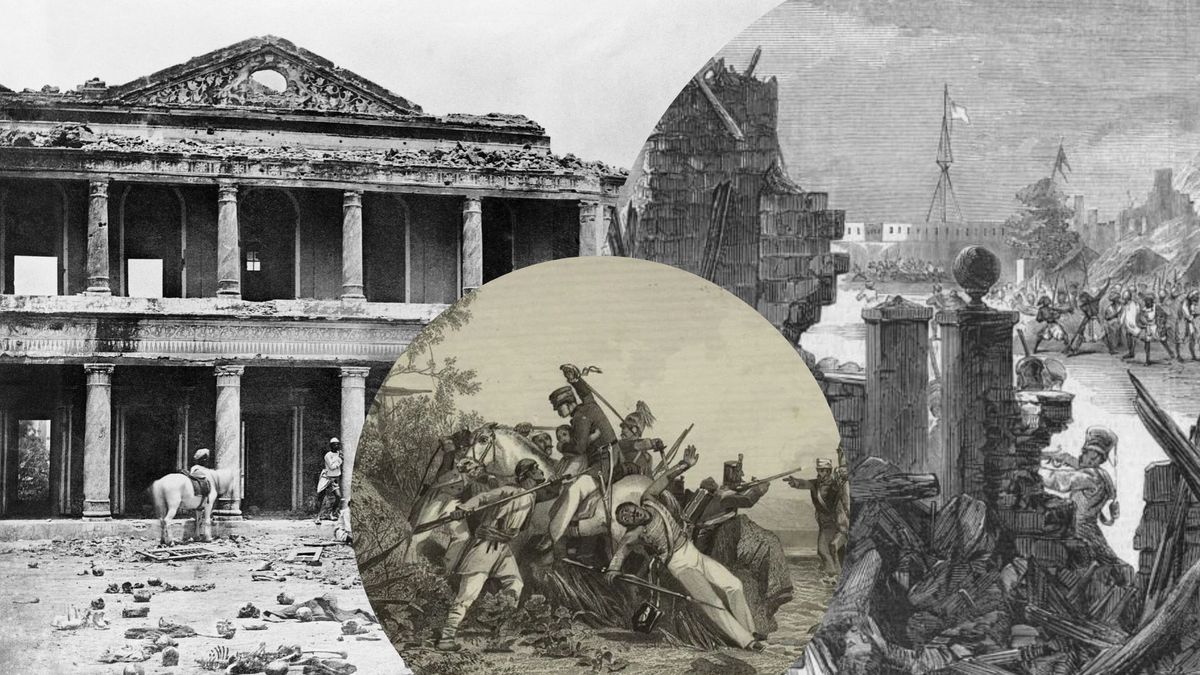 🌍World
Photo: 24 Канал
Key points
- The mutiny was triggered by rumors of animal fat-greased cartridges, offending Hindu and Muslim religious sentiments.
- The rebellion began in Meerut after 85 Sepoys refused to use the cartridges and were subsequently punished.
- The conflict escalated into a full-scale war of independence across northern and central India.
- The British suppressed the rebellion, but the British East India Company was dissolved.
- India came under direct rule of the British Crown, initiating the era of the British Raj.
Religious Offenses and New Cartridges: The Spark of Rebellion
In 1857, the British East India Company, which controlled India, faced an unexpected challenge that undermined the foundations of its dominion. The cause was a seemingly minor detail of military equipment – new rifle cartridges for the modernized Pattern 1853 Enfield rifle.
Among the local Sepoy soldiers, information quickly spread that the paper casings of the cartridges, which had to be bitten off with teeth before loading, were greased with a mixture of beef and pork fat. This circumstance was deeply offensive to the religious sensibilities of both Hindus, for whom the cow is sacred, and Muslims, for whom the pig is considered unclean.
Refusal of Cartridges and the Outbreak of Mutiny
Despite attempts to deny the rumors and offer alternative lubricants, the British command failed to restore trust. Tensions escalated, and as early as March 1857, in Barrackpore, a soldier named Mangal Pandey took up arms against British officers, becoming a symbol of resistance.
The climax occurred in late April in the city of Meerut, where 85 Sepoys refused to use the “cursed cartridges.” For this, they were publicly stripped of their uniforms and shackled. The next day, May 10, their comrades-in-arms launched an open revolt, freed the prisoners, killed British officers, and marched on Delhi, where they proclaimed the 81-year-old Bahadur Shah II, the last Mughal emperor, as their leader.
Brutality of the Conflict and Change of Power
The rebellion quickly escalated from a military mutiny into a full-scale war of independence, encompassing significant territories of northern and central India. Peasants, artisans, and local aristocrats joined the Sepoys. The conflict was marked by extreme brutality on both sides, including the massacre of British women and children in Kanpur and the subsequent brutal revenge by colonial troops, who used executions designed to deny rebels hope of reincarnation or entry into paradise.
By mid-1858, the British managed to suppress the rebellion, but this victory had significant consequences. The British East India Company was dissolved, and the administration of India passed directly to the British Crown. Queen Victoria became the direct ruler of these territories, ushering in the era of the British Raj, which lasted until 1947.
Source 24 Канал — 24tv.ua/povstannya-sipayiv-1857-yak-pochinavsya-naykrivavishiy-bunt-ist… ↗
Read next
 🛡️War & Security
Russian command threatens officers with assault duty due to falsified frontline reports
Due to discrepancies between the actual situation on the Zaporizhzhia front and reports submitted to senior leadership, Russian officers are facing threats of being sent …
 ⚖️Law & Anti-corruption
Estonian Supreme Court bans smartphone voting for elections
The Estonian Supreme Court has blocked plans to introduce mobile voting apps, citing cybersecurity risks and the lack of state control over private app stores.
 🇺🇦Ukraine
Ukrainian defense industry produces over half of artillery shells for the front
Rheinmetall CEO Armin Papperger stated that Ukrainian facilities now manufacture more than 50% of the artillery ammunition used by the Defense Forces.
 🇺🇦Ukraine
Russian army attacks Kremenchuk with drones: casualties include children
On the evening of November 27, Russian forces launched a drone strike on Kremenchuk in the Poltava region. Four civilians were injured, including three children.
 ⚖️Law & Anti-corruption
NABU Director Semen Kryvonos responds to criticism over skipping parliamentary commission hearings
Semen Kryvonos explained his absence from the Verkhovna Rada's temporary investigative commission hearings by citing foreign business trips and alleged pressure on anti-c…
 🇪🇺Europe & EU
Remains of Polish Army soldiers killed in 1939 reburied in Lviv region
A ceremony was held in the Lviv region to rebury 115 Polish Army soldiers who died during the 1939 defense of Lviv.