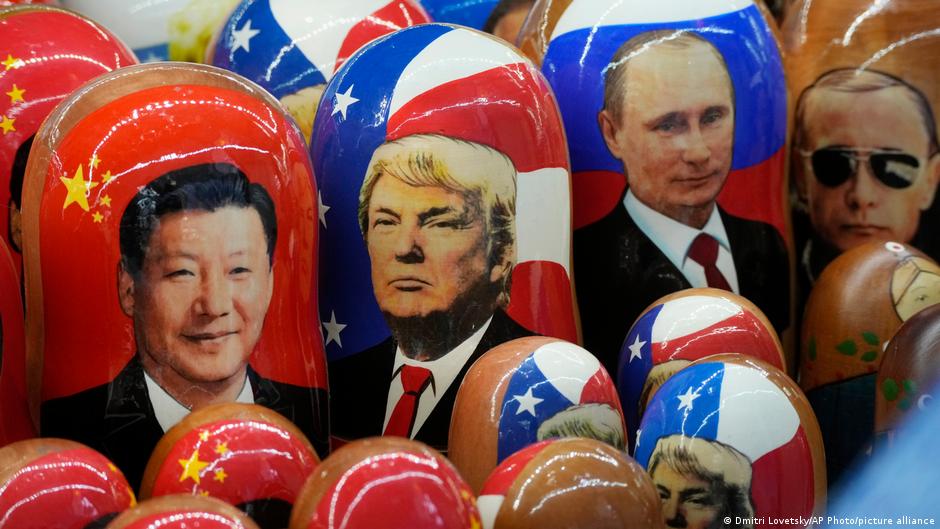
"New Yalta" Summit: Xi, Trump, and Putin May Meet in China Next Week
Leaders of China, the US, and Russia are reportedly coordinating a trilateral meeting on the sidelines of the APEC summit in Shenzhen to discuss global security.
 🌍World
Photo: DW (EN)
Key points
- Potential trilateral meeting between US, Chinese, and Russian leaders in Shenzhen.
- Putin seeks to break diplomatic isolation through high-level talks with Trump.
- Beijing fears reputational damage and potential fallout with the European Union.
An unprecedented meeting between the leaders of China, the United States, and Russia could take place next week in the Chinese tech hub of Shenzhen. The potential talks between Xi Jinping, Donald Trump, and Vladimir Putin on the sidelines of the Asia-Pacific Economic Cooperation (APEC) summit have already been dubbed a "new Yalta" by international media.
Diplomatic Signals and Positions
While Beijing has yet to officially confirm the event, a Chinese Foreign Ministry official stated that the government is "in communication" with the relevant parties. In Moscow, a Kremlin representative confirmed that "coordination" work is underway. The clearest indication came from US President Donald Trump, who told reporters he "thinks" a meeting with the Russian and Chinese leaders will occur during APEC.
For Vladimir Putin, such a format would represent a significant diplomatic victory, signaling an end to the international isolation he has faced since the full-scale invasion of Ukraine in 2022. Reports suggest that Putin himself proposed the trilateral summit during a call with Trump, aiming to discuss an end to the war in Ukraine, although Trump publicly mentioned only Iran and denuclearization as potential topics.
Beijing's Dilemma and Western Reaction
Despite its partnership with Moscow, China finds itself in a delicate position. Beijing is keen to maintain its image as a force for global stability and avoid damaging its economic ties with the European Union. Analysts warn that discussing the war in Ukraine without representatives from Kyiv or Brussels could trigger a severe escalation in China-EU relations.
"Beijing is aware of the potential negative optics of the 'Yalta 2.0' framing, even if this historical comparison is inaccurate and does not reflect current geopolitical dynamics," said Alicja Bachulska, a fellow at the European Council on Foreign Relations.
For the Trump administration, standing alongside America's foremost rivals presents reputational risks. However, the US President has previously shown a preference for personal diplomacy with authoritarian leaders to reshape global power balances.
Source DW (EN) — dw.com/en/beijing-faces-its-russia-dilemma-amid-talk-of-xi-trump-pu… ↗
Read next
 🛡️War & Security
Russian command threatens officers with assault duty due to falsified frontline reports
Due to discrepancies between the actual situation on the Zaporizhzhia front and reports submitted to senior leadership, Russian officers are facing threats of being sent …
 ⚖️Law & Anti-corruption
Estonian Supreme Court bans smartphone voting for elections
The Estonian Supreme Court has blocked plans to introduce mobile voting apps, citing cybersecurity risks and the lack of state control over private app stores.
 🇺🇦Ukraine
Ukrainian defense industry produces over half of artillery shells for the front
Rheinmetall CEO Armin Papperger stated that Ukrainian facilities now manufacture more than 50% of the artillery ammunition used by the Defense Forces.
 🇺🇦Ukraine
Russian army attacks Kremenchuk with drones: casualties include children
On the evening of November 27, Russian forces launched a drone strike on Kremenchuk in the Poltava region. Four civilians were injured, including three children.
 ⚖️Law & Anti-corruption
NABU Director Semen Kryvonos responds to criticism over skipping parliamentary commission hearings
Semen Kryvonos explained his absence from the Verkhovna Rada's temporary investigative commission hearings by citing foreign business trips and alleged pressure on anti-c…
 🇪🇺Europe & EU
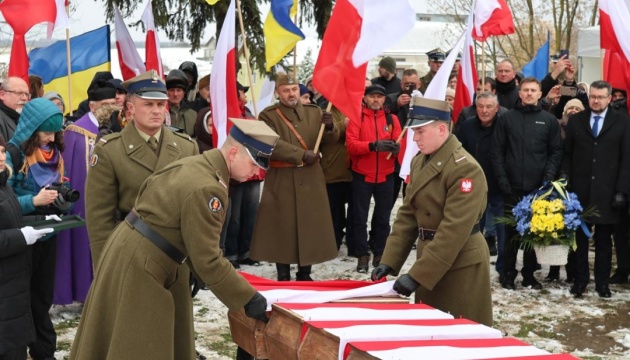
Remains of Polish Army soldiers killed in 1939 reburied in Lviv region
A ceremony was held in the Lviv region to rebury 115 Polish Army soldiers who died during the 1939 defense of Lviv.