GUR: Russia's Advanced Su-57 Fighter Jet Exploded at Airfield
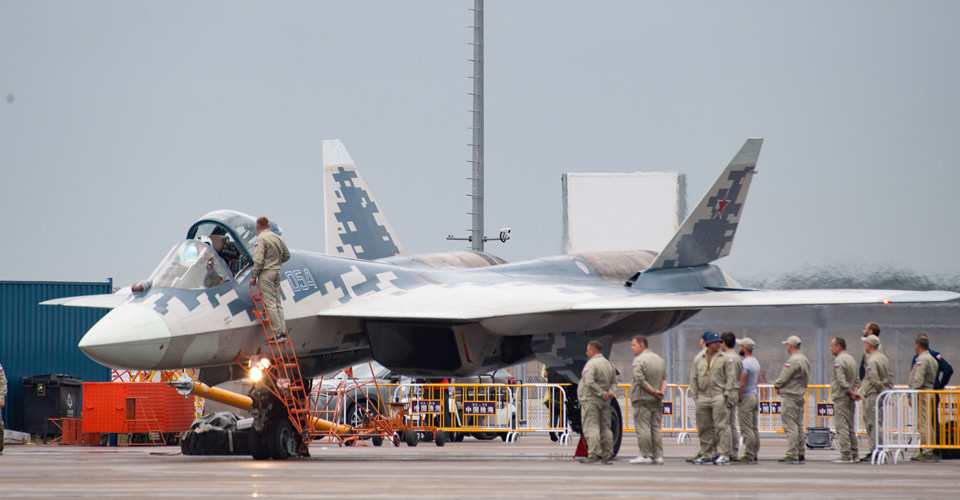
According to Ukrainian intelligence, on October 29, Russia's advanced Su-57 fighter jet, valued at $150 million, exploded at the Akhtubinsk military airfield.
 🛡️War & Security
Photo: Еспресо
Key points
- Advanced Su-57 exploded at Akhtubinsk airfield on October 29.
- Possible cause: substandard fuel due to Russia's import dependence.
- Russia's losses: 43 Su-34s destroyed, 7 damaged since invasion start.
- Ukraine destroyed two Su-34s with "Neptune" missiles on October 29.
- Su-34 production at Novosibirsk plant is 14-18 units annually.
Su-57 Incident and Potential Causes
The Main Directorate of Intelligence (GUR) of the Ministry of Defense of Ukraine reported an explosion involving Russia's advanced Su-57 fighter jet. The incident occurred on October 29 at the Akhtubinsk military airfield during engine startup. The estimated cost of such an aircraft is $150 million.
One potential cause for the explosion of AL-41F1 type engines, which equip the Su-57, could be the use of substandard fuel. Earlier, the GUR MO had indicated Russia's increasing reliance on imported aviation fuel due to a reduction in domestic jet fuel production, attributed to Ukraine's "long-range sanctions." Specifically, intelligence had identified sea shipments of gasoline and aviation fuel from India's Vadinar Refinery Nayara Energy.
Russian Aviation Losses and Production
Overall, according to GUR data, Russia has lost 43 Su-34 fighter-bombers since the start of the full-scale invasion, with an additional seven aircraft of this type damaged. On October 29, Ukrainian Defense Forces also destroyed two Su-34s with "Neptune" missiles at the Marinovka airfield in Russia's Volgograd region.
As of October 22, 2026, Russian aviation possessed approximately 140 Su-34 aircraft of various modifications, including modernized Su-34M. Serial production of these aircraft is concentrated at the Novosibirsk Aviation Plant, which, according to GUR estimates, can produce 14-18 units per year. Thus, the number of destroyed Su-34s corresponds to approximately 2.5–3 years of production.
Between October 2025 and October 2026, the Russian Aerospace Forces received 22 new aircraft. The priority for Russia remains the modernized Su-34M, which features improved onboard equipment and expanded weapons application capabilities.
During the war, Russia altered its tactics for using these aircraft. While initially Su-34s were often used for bombing with dangerous close approaches to targets, guided missiles and aerial bombs with UMPK planning and correction modules later played a crucial role. This allows Russian aviation to attack targets from a greater distance.
Source Еспресо — espreso.tv/viyna-z-rosiyeyu-u-rosii-vibukhnuv-novitniy-vinishchuvach-su… ↗
Read next
 🌍World
Russian negotiators plan to use AI to draft diplomatic agreements
Kirill Dmitriev announced the Kremlin's intention to use neural networks to frame and argue Russian positions in international negotiations.
 🌍World
Russia to Officially Integrate War Veterans into School Graduation Programs
The Russian Ministry of Education has issued guidelines requiring schools to include combat veterans in official graduation ceremonies by 2027.
 🇺🇦Ukraine
Holodomor Remembrance Day: When and How Ukraine Honors the Victims
Every year on the fourth Saturday of November, Ukraine commemorates the millions of victims of man-made famines organized by the Soviet regime. In 2026, this day falls on…
 🇺🇸USA
ACLU seeks court order to block Trump administration's efforts to unmask ICE critics
The American Civil Liberties Union (ACLU) has filed a lawsuit against the U.S. Department of Justice and the Department of Homeland Security, alleging abuse of the grand …
 🌍World
Taiwan holds local elections amid intense political competition
Taiwanese voters are heading to the polls to elect mayors and local council members across 22 cities and counties. The results will shape local governance for the next fo…
 🇺🇸USA
U.S. Air Force Cloud Platform Breached by Hackers
The U.S. Air Force's Cloud One platform has been breached in a cyberattack, potentially exposing sensitive military and personnel data.