Russia Targets Ukraine's Power Grid and Ports in Massive Overnight Strike
On November 3, Russian forces attacked four thermal power plants and port infrastructure, causing significant damage and civilian casualties.
 🛡️War & Security
Photo: Главред
Key points
- Four major TPPs with a total capacity of 6.4 GW were targeted.
- 15 people were injured in Dnipro, including three in critical condition.
- Russia is developing jet-powered drones capable of reaching speeds up to 900 km/h.
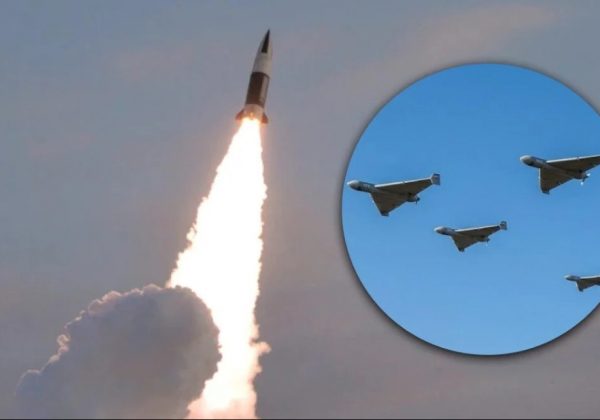
On the night of November 3, Russian forces launched a large-scale attack on Ukraine's critical infrastructure, focusing on the energy sector and logistics hubs. According to the Russian Ministry of Defense, the targets included four thermal power plants (TPPs), two major substations, and port facilities in the Odesa region. The assault involved combined weaponry, including at least 18 ballistic and hypersonic missiles, along with advanced jet-powered drones.
Impact on Energy Generation
Strategically important facilities in the Dnipropetrovsk, Vinnytsia, and Kharkiv regions came under fire. Specifically, the Kryvorizka TPP (2800 MW), Prydniprovska TPP (1765 MW), and Ladyzhynska TPP (1800 MW) were targeted, as well as the Kharkivska TPP. The combined capacity of the affected stations exceeds 6.4 GW, representing a significant portion of the country's maneuverable power generation. Additionally, the Zmiivska and Losevo high-voltage substations in the Kharkiv region were damaged.
Port Attacks and Civilian Casualties
The Odesa region was another primary focus of the strike. Reports indicate damage to infrastructure in the port of Kilia and attacks on two cargo ships—one located in the port of Pivdennyi and another in the Black Sea. In Dnipro, the number of injured civilians has risen to 15, with three individuals in critical condition. Search and rescue operations are ongoing amid the constant threat of follow-up strikes.
Technological Modernization of Attack Systems
Aviation expert Bohdan Dolintse noted that Russia is actively upgrading its strike drones, aiming to increase the speed of jet-powered UAVs to 750–900 km/h.
"The enemy is not standing still. They are analyzing the effectiveness of their assets and trying to improve and expand the range of their systems,"the expert emphasized. New models are expected to feature optical navigation systems and electronic warfare tools, necessitating a strengthening of Ukraine's air defense capabilities.
Source Главред — glavred.net/war/v-rf-nazvali-celi-nochnogo-udara-po-ukraine-v-spisok-vo… ↗
Read next
 ⚖️Law & Anti-corruption
Estonian Supreme Court bans smartphone voting for elections
The Estonian Supreme Court has blocked plans to introduce mobile voting apps, citing cybersecurity risks and the lack of state control over private app stores.
 🇺🇦Ukraine
Ukrainian defense industry produces over half of artillery shells for the front
Rheinmetall CEO Armin Papperger stated that Ukrainian facilities now manufacture more than 50% of the artillery ammunition used by the Defense Forces.
 🌍World
China tests new landing tactics against Taiwan: satellites spot 800-meter floating bridge
Chinese military forces conducted drills in Fujian province, testing the construction of an 800-meter floating bridge using civilian vessels to transport heavy equipment.
 🇺🇦Ukraine
Russian army attacks Kremenchuk with drones: casualties include children
On the evening of November 27, Russian forces launched a drone strike on Kremenchuk in the Poltava region. Four civilians were injured, including three children.
 ⚖️Law & Anti-corruption
NABU Director Semen Kryvonos responds to criticism over skipping parliamentary commission hearings
Semen Kryvonos explained his absence from the Verkhovna Rada's temporary investigative commission hearings by citing foreign business trips and alleged pressure on anti-c…
 🇪🇺Europe & EU
Remains of Polish Army soldiers killed in 1939 reburied in Lviv region
A ceremony was held in the Lviv region to rebury 115 Polish Army soldiers who died during the 1939 defense of Lviv.