Threat to NATO: Is Russia Ready for a New War and How is the Alliance Responding?
While the war in Ukraine continues, a full-scale Russian attack on NATO remains unlikely, though hybrid provocations are a distinct possibility. The Alliance is proactively developing new deterrence strategies to counter potential long-term threats.
 🛡️War & Security
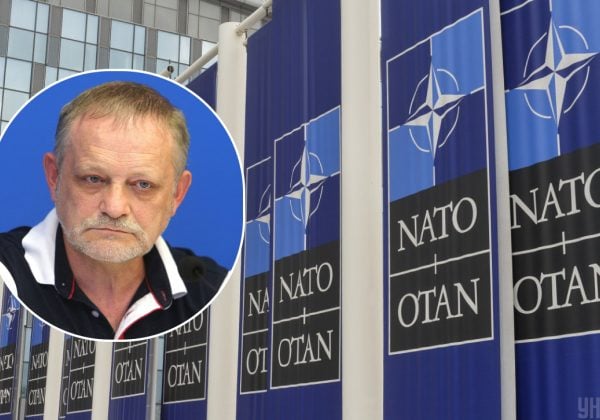
Photo: Главред
Key points
- A full-scale Russian invasion of NATO is unlikely while resources remain tied up in Ukraine.
- Analysts warn of potential hybrid provocations and border security risks involving Belarus.
- NATO is advancing a new 'Theory of Victory' strategy to address potential long-term aggression.
While the war in Ukraine persists, Moscow has little strategic incentive to disperse its military resources, making a full-scale operation against NATO allies highly unlikely. This assessment was shared by Andriy Zolotaryov, director of the Third Sector analytical center, in an interview with Glavred, emphasizing that Russian forces are unlikely to attempt such aggressive moves before the conflict in Ukraine concludes.
However, the expert warns that hybrid warfare tactics and targeted provocations cannot be ruled out. Specifically, there are ongoing risks of illegal border crossings by saboteurs or groups moving from Belarusian territory into Poland or the Baltic states. Furthermore, Russia is actively reinforcing the Leningrad Military District—which borders Finland, Norway, and the Baltics—with military resources on an unprecedented scale.
In response to these evolving security challenges, NATO has formulated a new strategic framework known as the 'Theory of Victory'. This concept outlines a phased response system, ranging from repelling an initial enemy strike to the complete suppression of the aggressor's military capabilities. Previously, NATO Secretary General Mark Rutte cautioned that the Alliance must prepare for various scenarios, including a potential Russian confrontation within the next five to seven years.
«Russia is currently not ready for a full-scale military aggression against NATO», — noted Andriy Zolotaryov.
Meanwhile, analysts from the Institute for the Study of War (ISW) also suggest that Moscow is preparing for potential future conflicts with Western nations. These concerns are reinforced by broader international evaluations indicating that the Kremlin's strategic ambitions extend well beyond Ukrainian borders, prompting heightened defense readiness across Europe.
Source Главред — glavred.net/world/kakie-strany-na-pricele-kremlya-politolog-predupredil… ↗
Read next
 ⚖️Law & Anti-corruption
Estonian Supreme Court bans smartphone voting for elections
The Estonian Supreme Court has blocked plans to introduce mobile voting apps, citing cybersecurity risks and the lack of state control over private app stores.
 🇺🇦Ukraine
Ukrainian defense industry produces over half of artillery shells for the front
Rheinmetall CEO Armin Papperger stated that Ukrainian facilities now manufacture more than 50% of the artillery ammunition used by the Defense Forces.
 🌍World
China tests new landing tactics against Taiwan: satellites spot 800-meter floating bridge
Chinese military forces conducted drills in Fujian province, testing the construction of an 800-meter floating bridge using civilian vessels to transport heavy equipment.
 🇺🇦Ukraine
Russian army attacks Kremenchuk with drones: casualties include children
On the evening of November 27, Russian forces launched a drone strike on Kremenchuk in the Poltava region. Four civilians were injured, including three children.
 ⚖️Law & Anti-corruption
NABU Director Semen Kryvonos responds to criticism over skipping parliamentary commission hearings
Semen Kryvonos explained his absence from the Verkhovna Rada's temporary investigative commission hearings by citing foreign business trips and alleged pressure on anti-c…
 🇪🇺Europe & EU
Remains of Polish Army soldiers killed in 1939 reburied in Lviv region
A ceremony was held in the Lviv region to rebury 115 Polish Army soldiers who died during the 1939 defense of Lviv.