Technological Features of 'Iskander' Missiles: How Russia Bypasses Ukrainian EW to Strike Bridges
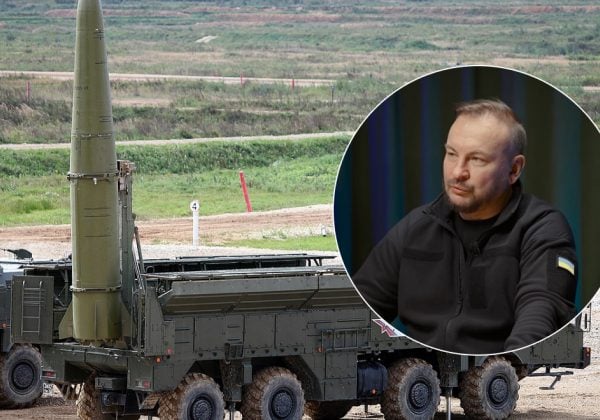
Russian forces are utilizing advanced optical and radar guidance systems to increase the precision of Iskander ballistic missiles.
 🛡️War & Security
Photo: Главред
Key points
- Integration of optical and radar guidance systems into Iskander missiles.
- Missile capability to correct course based on real-time terrain mapping.
- Deployment of decoys to bypass Ukrainian air defense systems.
The Russian military has enhanced its tactical use of Iskander ballistic missiles, enabling them to strike critical infrastructure, such as bridges, even in environments with active Ukrainian electronic warfare (EW) countermeasures. According to Serhii Beskrestnov, an advisor to the President on defense technology development, also known as "Flash," the enemy has integrated specialized optical and radar correction systems into the missile warheads.
These technologies allow the missile to scan the terrain in real-time during the final phase of its flight. The data is matched against a pre-loaded terrain map, allowing for trajectory adjustments seconds before impact. This effectively neutralizes the impact of satellite signal jamming, which typically disrupts standard inertial guidance systems.
In addition to guidance systems, experts note the modernization of anti-air penetration capabilities. Mykhailo Liuksikov, editor-in-chief of Militarnyi, stated that Iskander missiles are capable of deploying decoys that confuse air defense radars, forcing them to track multiple targets instead of a single actual munition.
Over the past few months, Russian forces have repeatedly targeted bridges in Kyiv and Zaporizhzhia. These strikes have caused damage to road surfaces and infrastructure, confirming a shift in the enemy's strategy regarding the use of high-precision weaponry.
Source Главред — glavred.net/war/pochemu-iskandery-popadayut-v-mosty-flesh-raskryl-sekre… ↗
Read next
 ⚖️Law & Anti-corruption
Estonian Supreme Court bans smartphone voting for elections
The Estonian Supreme Court has blocked plans to introduce mobile voting apps, citing cybersecurity risks and the lack of state control over private app stores.
 🇺🇦Ukraine
Ukrainian defense industry produces over half of artillery shells for the front
Rheinmetall CEO Armin Papperger stated that Ukrainian facilities now manufacture more than 50% of the artillery ammunition used by the Defense Forces.
 🌍World
China tests new landing tactics against Taiwan: satellites spot 800-meter floating bridge
Chinese military forces conducted drills in Fujian province, testing the construction of an 800-meter floating bridge using civilian vessels to transport heavy equipment.
 🇺🇦Ukraine
Russian army attacks Kremenchuk with drones: casualties include children
On the evening of November 27, Russian forces launched a drone strike on Kremenchuk in the Poltava region. Four civilians were injured, including three children.
 ⚖️Law & Anti-corruption
NABU Director Semen Kryvonos responds to criticism over skipping parliamentary commission hearings
Semen Kryvonos explained his absence from the Verkhovna Rada's temporary investigative commission hearings by citing foreign business trips and alleged pressure on anti-c…
 🇪🇺Europe & EU
Remains of Polish Army soldiers killed in 1939 reburied in Lviv region
A ceremony was held in the Lviv region to rebury 115 Polish Army soldiers who died during the 1939 defense of Lviv.