Lessons of Starfish Prime: How a US Nuclear Test in Space Paralyzed Hawaiian Infrastructure
A retrospective on the 1962 Starfish Prime test reveals the devastating impact of nuclear electromagnetic pulses on electronics and orbital assets.
 🛡️War & Security
Photo: УНІАН
Key points
- A nuclear blast at 400 km altitude generated an unexpectedly powerful electromagnetic pulse.
- The test disabled infrastructure in Hawaii, 1,400 km from the detonation site.
- Artificial radiation destroyed six satellites, including the pioneering Telstar communication craft.
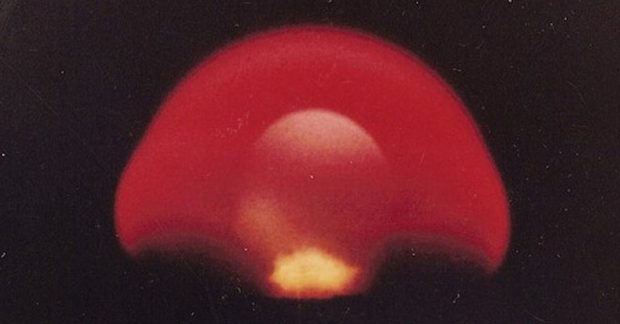
In July 1962, the United States conducted one of its most significant high-altitude military tests, codenamed Starfish Prime. A Thor rocket carrying a 1.4-megaton nuclear warhead was launched from Johnston Atoll and detonated at an altitude of 400 kilometers. The experiment aimed to study the effects of a nuclear explosion in the vacuum of space, but the results far exceeded the expectations of scientists and military planners.
Devastating Impact on Civilian Infrastructure
Despite the vast distance from the epicenter, the consequences were felt by residents of the Hawaiian Islands, located 1,400 kilometers away. A powerful electromagnetic pulse (EMP), generated by the interaction of released electrons with Earth's magnetic field, caused widespread disruptions. On the island of Oahu, approximately 300 streetlights suddenly failed, telephone lines were disrupted, and burglar alarms were triggered en masse without apparent cause.
"Calculations made before the test significantly underestimated its strength," researchers noted, analyzing data on the unpredictable intensity of the EMP.
Orbital Consequences and Satellite Failures
The explosion not only created a brilliant artificial aurora visible as far away as New Zealand but also left a lasting mark on Earth's orbit. The test resulted in the formation of a temporary radiation belt that persisted for several months. This led to serious losses in the nascent space industry:
- At least six satellites failed due to radiation damage.
- The Telstar satellite, which provided the first transatlantic television broadcasts, ceased functioning.
- Prolonged radio communication interference occurred across the Pacific region.
The Starfish Prime experience became a key argument for subsequent restrictions on nuclear testing in outer space, as it demonstrated the uncontrollable consequences for global security and technological progress.
Source УНІАН — unian.ua/curiosities/yaderna-zbroya-v-kosmosi-shcho-pokazav-testovi… ↗
Read next
 ⚖️Law & Anti-corruption
Estonian Supreme Court bans smartphone voting for elections
The Estonian Supreme Court has blocked plans to introduce mobile voting apps, citing cybersecurity risks and the lack of state control over private app stores.
 🇺🇦Ukraine
Ukrainian defense industry produces over half of artillery shells for the front
Rheinmetall CEO Armin Papperger stated that Ukrainian facilities now manufacture more than 50% of the artillery ammunition used by the Defense Forces.
 🌍World
China tests new landing tactics against Taiwan: satellites spot 800-meter floating bridge
Chinese military forces conducted drills in Fujian province, testing the construction of an 800-meter floating bridge using civilian vessels to transport heavy equipment.
 🇺🇦Ukraine
Russian army attacks Kremenchuk with drones: casualties include children
On the evening of November 27, Russian forces launched a drone strike on Kremenchuk in the Poltava region. Four civilians were injured, including three children.
 ⚖️Law & Anti-corruption
NABU Director Semen Kryvonos responds to criticism over skipping parliamentary commission hearings
Semen Kryvonos explained his absence from the Verkhovna Rada's temporary investigative commission hearings by citing foreign business trips and alleged pressure on anti-c…
 🇪🇺Europe & EU
Remains of Polish Army soldiers killed in 1939 reburied in Lviv region
A ceremony was held in the Lviv region to rebury 115 Polish Army soldiers who died during the 1939 defense of Lviv.