Russia adapts electronic warfare systems to jam Starlink: how to identify new threats
Presidential advisor Serhiy Beskrestnov has revealed the concealment methods used by Russian EW complexes that disrupt Starlink operations on the front lines.
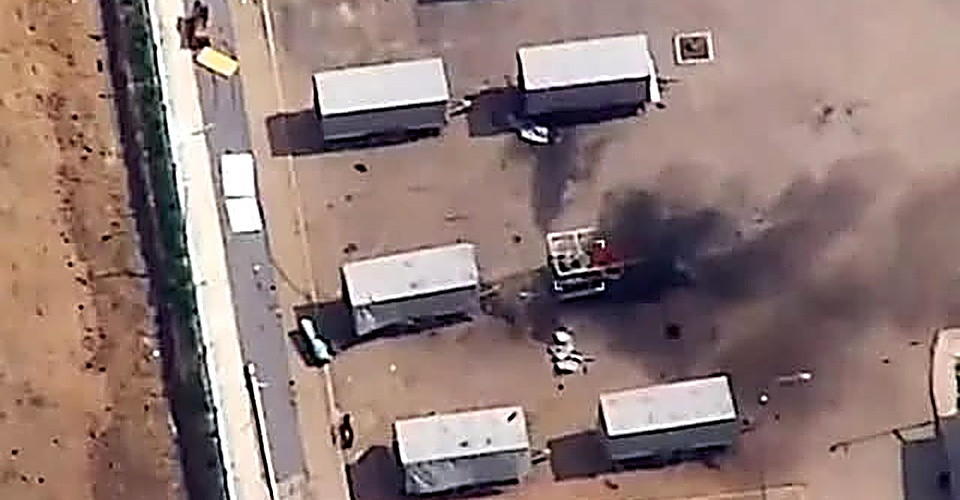 🛡️War & Security
Photo: Еспресо
Key points
- Russia camouflages EW systems as trucks and greenhouses
- Systems operate in the 14.0–14.5 GHz range
- Complexes can operate autonomously using generators
Russian occupation forces are actively expanding their network of electronic warfare (EW) systems aimed at suppressing Starlink satellite communications. According to Serhiy Beskrestnov, an advisor to the President on defense technology development, the enemy has shifted from bulky structures to mobile and camouflaged solutions.
Modern EW complexes operate in the 14.0–14.5 GHz frequency range, providing coverage over approximately 25 square kilometers. While such systems were previously easy to identify due to the large number of trailers involved, occupiers are now integrating them into civilian infrastructure. Beskrestnov notes that antennas with a diameter of about one meter are often hidden inside trucks, small trailers, or even greenhouses that obstruct visual observation.
Pay attention to truck parking areas – this is an ideal place to camouflage the complex. Out of dozens of trucks, 3 to 6 may have a system mounted inside, — explains Serhiy Beskrestnov.
The expert emphasizes that the presence of power substations nearby is not a mandatory indicator of an EW position, as the systems can run autonomously on generators. Since the antennas require a clear line of sight to the zenith, aerial reconnaissance should focus on any suspicious structures hidden under polycarbonate or plastic sheeting that were not previously recorded on local maps.
Source Еспресо — espreso.tv/tekhnologiyi-teplitsi-prichepi-y-vantazhivki-flesh-rozpoviv-… ↗
Read next
 ⚖️Law & Anti-corruption
Estonian Supreme Court bans smartphone voting for elections
The Estonian Supreme Court has blocked plans to introduce mobile voting apps, citing cybersecurity risks and the lack of state control over private app stores.
 🇺🇦Ukraine
Ukrainian defense industry produces over half of artillery shells for the front
Rheinmetall CEO Armin Papperger stated that Ukrainian facilities now manufacture more than 50% of the artillery ammunition used by the Defense Forces.
 🌍World
China tests new landing tactics against Taiwan: satellites spot 800-meter floating bridge
Chinese military forces conducted drills in Fujian province, testing the construction of an 800-meter floating bridge using civilian vessels to transport heavy equipment.
 🇺🇦Ukraine
Russian army attacks Kremenchuk with drones: casualties include children
On the evening of November 27, Russian forces launched a drone strike on Kremenchuk in the Poltava region. Four civilians were injured, including three children.
 ⚖️Law & Anti-corruption
NABU Director Semen Kryvonos responds to criticism over skipping parliamentary commission hearings
Semen Kryvonos explained his absence from the Verkhovna Rada's temporary investigative commission hearings by citing foreign business trips and alleged pressure on anti-c…
 🇪🇺Europe & EU
Remains of Polish Army soldiers killed in 1939 reburied in Lviv region
A ceremony was held in the Lviv region to rebury 115 Polish Army soldiers who died during the 1939 defense of Lviv.