Obstacles to Evacuation from Oleshky: Why Many Residents Remained in Occupied Territory
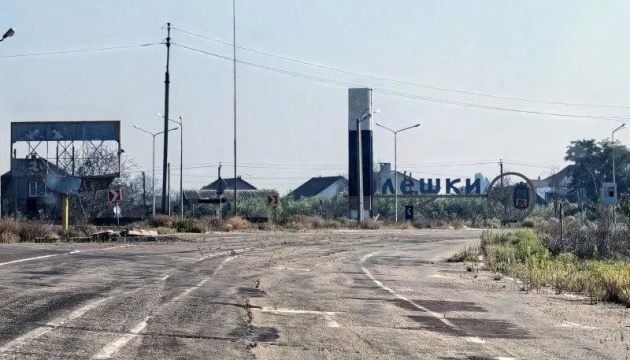
Tetyana Hasanenko, head of the Oleshky Military Administration, detailed the challenges that prevented residents from leaving during the recent humanitarian mission.
 🛡️War & Security
Photo: Укрінформ
Key points
- Communication silence left many residents unaware of the evacuation window.
- Lack of transport for the disabled prevented them from reaching the pickup point.
- The fear of Russian filtration camps continues to discourage civilians from fleeing.
During a humanitarian operation in the temporarily occupied town of Oleshky, Kherson region, which took place from October 27 to November 1, many residents were unable to utilize the evacuation corridor. Tetyana Hasanenko, head of the Oleshky Military Vocational Administration, identified communication breakdowns and logistical failures as primary reasons for the incomplete evacuation.
Information Blackout and Distrust
According to Hasanenko, many residents were completely unaware of the evacuation efforts. Those hiding in basements without cellular service or internet had no way of receiving updates. Furthermore, the psychological toll of the occupation made it difficult for civilians to trust the announced "silence regime." Many found it hard to believe that a safe passage was truly available after prolonged periods of shelling.
Logistical Hurdles for Vulnerable Groups
The evacuation of people with limited mobility proved particularly difficult. While the designated assembly point was located near the local hospital, many elderly or disabled residents waited for transportation from the Russian side that never arrived. Additionally, the fear of undergoing Russian "filtration" processes deterred many from attempting to leave.
- Lack of communication prevented people in shelters from learning about the mission.
- Limited mobility residents could not reach the assembly point without assistance.
- Fear of filtration remained a significant psychological barrier for the population.
"People in the community are in such a state that it is difficult for them to believe in anything. It is hard to assess what is happening around them," Hasanenko noted.
The Ukrainian delegation involved in the mission returned to government-controlled territory on October 31. Despite the challenges, the mission successfully picked up several individuals who were waiting for the convoy along the main highway.
Source Укрінформ — ukrinform.ua/rubric-regions/4181675-u-oleskivskij-mva-poasnili-comu… ↗
Read next
 🌍World
Russian negotiators plan to use AI to draft diplomatic agreements
Kirill Dmitriev announced the Kremlin's intention to use neural networks to frame and argue Russian positions in international negotiations.
 🌍World
Russia to Officially Integrate War Veterans into School Graduation Programs
The Russian Ministry of Education has issued guidelines requiring schools to include combat veterans in official graduation ceremonies by 2027.
 🇺🇦Ukraine
Holodomor Remembrance Day: When and How Ukraine Honors the Victims
Every year on the fourth Saturday of November, Ukraine commemorates the millions of victims of man-made famines organized by the Soviet regime. In 2026, this day falls on…
 🇺🇸USA
ACLU seeks court order to block Trump administration's efforts to unmask ICE critics
The American Civil Liberties Union (ACLU) has filed a lawsuit against the U.S. Department of Justice and the Department of Homeland Security, alleging abuse of the grand …
 🌍World
Taiwan holds local elections amid intense political competition
Taiwanese voters are heading to the polls to elect mayors and local council members across 22 cities and counties. The results will shape local governance for the next fo…
 🇺🇸USA
U.S. Air Force Cloud Platform Breached by Hackers
The U.S. Air Force's Cloud One platform has been breached in a cyberattack, potentially exposing sensitive military and personnel data.