Provocation in Borshchahivka: Analysis of Potential Russian Involvement in 'Azov' Incident
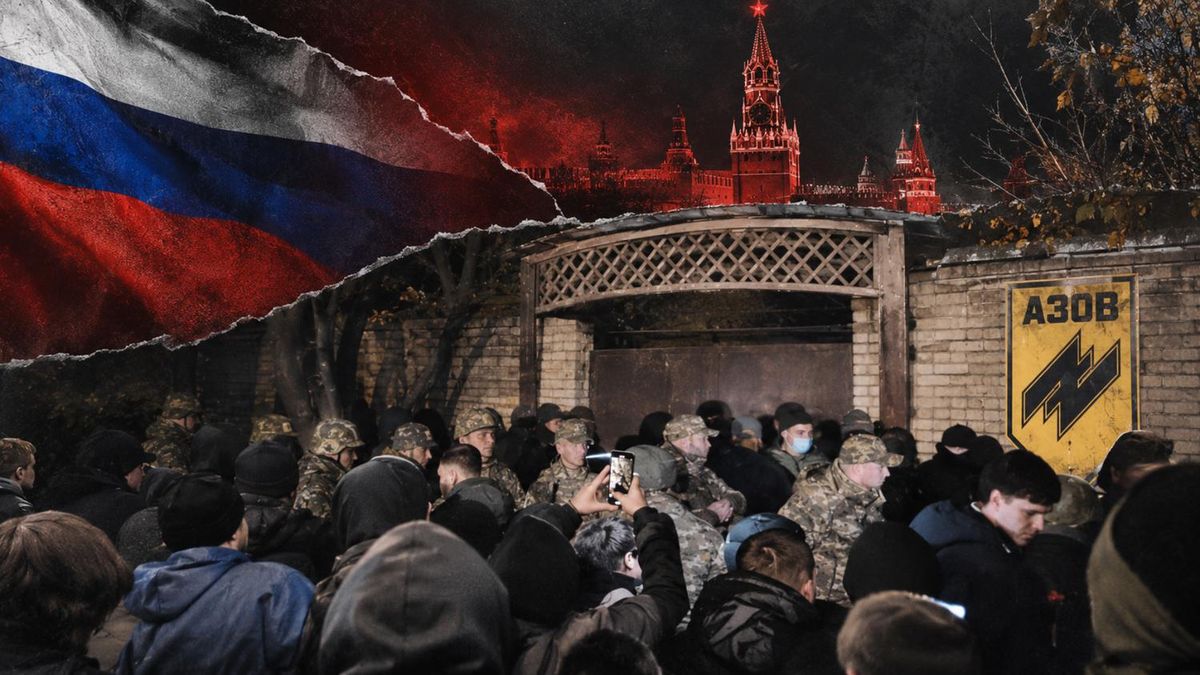
Unrest near an 'Azov' unit location in Petropavlivska Borshchahivka shows signs of a coordinated Russian influence operation targeting Ukraine's military.
 🛡️War & Security
Photo: 24 Канал
Key points
- Budanov confirmed signs of external influence in the Borshchahivka unrest.
- The target was the 'Azov' combat unit, which is not involved in street mobilization.
- The use of fake medical vehicles and coordinated Telegram campaigns suggests a pre-planned operation.
Recent disturbances in Petropavlivska Borshchahivka, near Kyiv, have raised serious concerns regarding national security and the potential for foreign interference. Kyrylo Budanov, head of Ukraine’s military intelligence (GUR), noted that the events showed clear signs of external influence. Law enforcement agencies have already identified approximately 100 individuals involved in the unrest, which was heavily promoted via coordinated Telegram networks.
Targeting the 'Azov' Unit
The choice of location — near an 'Azov' military unit — suggests a strategic objective. Unlike Territorial Recruitment Centers (TCC), 'Azov' is a combat formation that does not conduct street mobilizations. Experts believe the primary goal was to provoke a violent escalation. "For Russian propaganda, 'Azov' has special significance," analysts observe, suggesting that any footage of soldiers clashing with civilians would be a major victory for the Kremlin’s narrative.
The presence of suspicious elements, including individuals in balaclavas and vehicles illegally marked as ambulances, points toward a staged operation rather than a spontaneous protest. The involvement of people with criminal backgrounds or significant debts also hints at potential recruitment by foreign intelligence services.
Hybrid Warfare and Social Tension
- Coordinated information campaigns across social media platforms.
- Misuse of medical symbols and uniforms to gain public sympathy.
- Exploitation of public anxiety regarding mobilization processes.
This incident serves as a stark reminder of how internal social issues can be weaponized in hybrid warfare. While legitimate concerns about mobilization exist, the deliberate targeting of elite combat units indicates a broader effort to destabilize Ukraine's internal security and undermine military morale.
Source 24 Канал — 24tv.ua/zavorushennya-borshhagivtsi-mogli-buti-provokatsiyeyu-proti-azo… ↗
Read next
 ⚖️Law & Anti-corruption
Estonian Supreme Court bans smartphone voting for elections
The Estonian Supreme Court has blocked plans to introduce mobile voting apps, citing cybersecurity risks and the lack of state control over private app stores.
 🇺🇦Ukraine
Ukrainian defense industry produces over half of artillery shells for the front
Rheinmetall CEO Armin Papperger stated that Ukrainian facilities now manufacture more than 50% of the artillery ammunition used by the Defense Forces.
 🌍World
China tests new landing tactics against Taiwan: satellites spot 800-meter floating bridge
Chinese military forces conducted drills in Fujian province, testing the construction of an 800-meter floating bridge using civilian vessels to transport heavy equipment.
 🇺🇦Ukraine
Russian army attacks Kremenchuk with drones: casualties include children
On the evening of November 27, Russian forces launched a drone strike on Kremenchuk in the Poltava region. Four civilians were injured, including three children.
 ⚖️Law & Anti-corruption
NABU Director Semen Kryvonos responds to criticism over skipping parliamentary commission hearings
Semen Kryvonos explained his absence from the Verkhovna Rada's temporary investigative commission hearings by citing foreign business trips and alleged pressure on anti-c…
 🇪🇺Europe & EU
Remains of Polish Army soldiers killed in 1939 reburied in Lviv region
A ceremony was held in the Lviv region to rebury 115 Polish Army soldiers who died during the 1939 defense of Lviv.