Russian Corvette 'Mercury' Reportedly Destroyed in Libyan Port Explosion
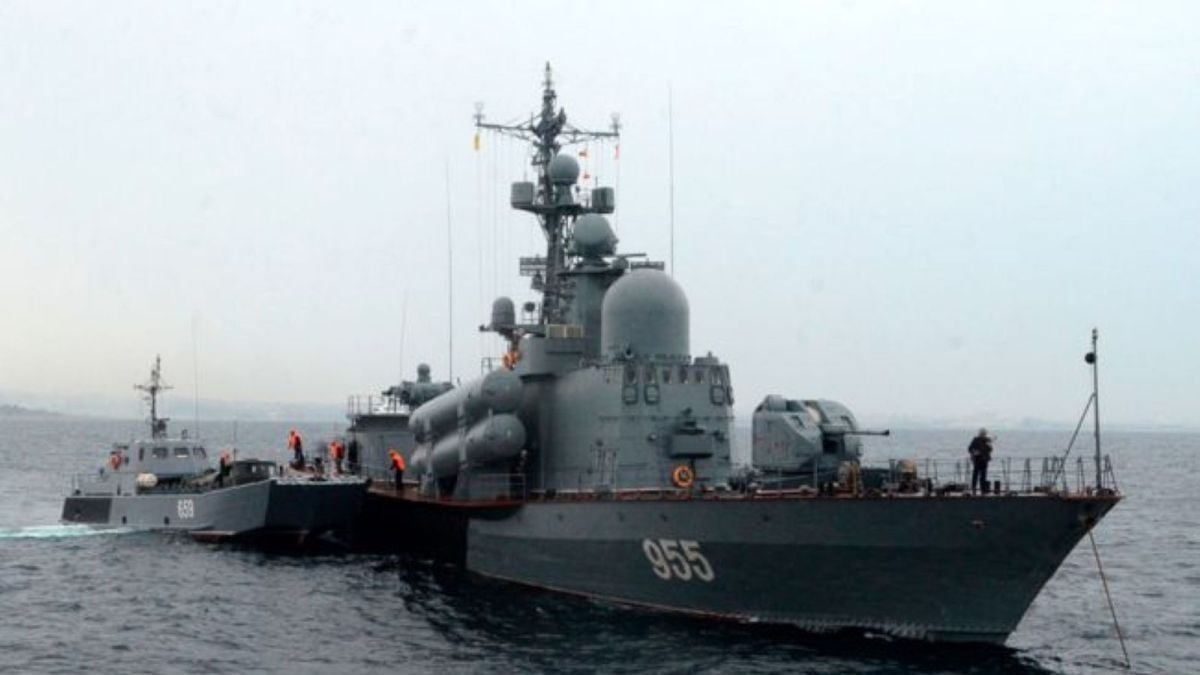
A powerful explosion and fire in the port of Benghazi, Libya, have likely destroyed the Russian Project 20380 corvette 'Mercury'. The vessel was involved in escorting military supply convoys.
 🛡️War & Security
Photo: Захід.net
Key points
- Russian corvette 'Mercury' likely destroyed following a massive blast in Benghazi.
- The vessel was a key part of Russia's military logistics network in the Mediterranean.
- The incident follows a series of mysterious attacks on Russian naval assets worldwide.
On the night of November 22, a major explosion rocked the Libyan port of Benghazi, leading to a devastating fire on a Russian warship. According to Naval News and local reports, the vessel is the Mercury, a Project 20380 Steregushchiy-class corvette. The ship had been stationed in the port for several days as part of a convoy escorting Russian military exports.
Explosion and Vessel Status
Reports indicate that following the blast, the ship was completely engulfed in flames. While there is no official confirmation of it sinking, naval experts suggest the corvette is "almost certainly destroyed" due to the intensity of the fire. Libya's National Security Directorate in the eastern region confirmed an ammunition explosion at the port, stating that the situation had been brought under control.
Simultaneously, unconfirmed reports on social media suggested anti-aircraft activity over Benghazi just before the explosion. Neither the Russian Ministry of Defense nor the Libyan authorities have issued formal statements regarding the cause of the incident or potential casualties among the crew.
Strategic Context
The 'Mercury' is a modern 2,200-ton combatant armed with "Uran" anti-ship missiles and "Redut" air defense systems. Although part of the Black Sea Fleet, the vessel has been operating from Northern Fleet bases due to the ongoing conflict in Ukraine and the closure of the Turkish Straits. It played a vital role in securing Russia's logistical maritime routes in the Mediterranean.
Analysts link this event to a pattern of recent attacks on Russian-linked vessels involved in military logistics. Notable incidents include the strike on the Sparta II in the Gulf of Finland and damage to the sister ship 'Boykiy'. There is ongoing speculation that Ukrainian special operations may be targeting Russian naval assets globally to disrupt the Kremlin's military supply chains and influence in regions like Africa.
Source Захід.net — zaxid.net/rosiyskiy_korvet_merkuriy_zagorivsya_pislya_vibuhu_v_portu_li… ↗
Read next
 ⚖️Law & Anti-corruption
Estonian Supreme Court bans smartphone voting for elections
The Estonian Supreme Court has blocked plans to introduce mobile voting apps, citing cybersecurity risks and the lack of state control over private app stores.
 🇺🇦Ukraine
Ukrainian defense industry produces over half of artillery shells for the front
Rheinmetall CEO Armin Papperger stated that Ukrainian facilities now manufacture more than 50% of the artillery ammunition used by the Defense Forces.
 🌍World
China tests new landing tactics against Taiwan: satellites spot 800-meter floating bridge
Chinese military forces conducted drills in Fujian province, testing the construction of an 800-meter floating bridge using civilian vessels to transport heavy equipment.
 🇺🇦Ukraine
Russian army attacks Kremenchuk with drones: casualties include children
On the evening of November 27, Russian forces launched a drone strike on Kremenchuk in the Poltava region. Four civilians were injured, including three children.
 ⚖️Law & Anti-corruption
NABU Director Semen Kryvonos responds to criticism over skipping parliamentary commission hearings
Semen Kryvonos explained his absence from the Verkhovna Rada's temporary investigative commission hearings by citing foreign business trips and alleged pressure on anti-c…
 🇪🇺Europe & EU
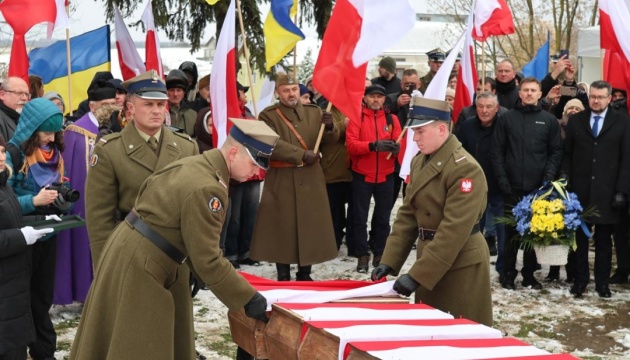
Remains of Polish Army soldiers killed in 1939 reburied in Lviv region
A ceremony was held in the Lviv region to rebury 115 Polish Army soldiers who died during the 1939 defense of Lviv.