Russia Deploys AI Deepfakes to Fracture Ukrainian Society and Erode Western Support
A new wave of Russian disinformation uses AI-generated content on TikTok to incite conflict between Ukrainian refugees and citizens remaining in the country.
 🛡️War & Security
Photo: Еспресо
Key points
- Russia is using AI deepfakes on TikTok to incite internal conflict in Ukraine.
- The 'Desperate Ukrainians vs. Overseas Patriots' campaign aims to demoralize the public.
- Propagandists use real people's likenesses, including Russian streamers, to create fake narratives.
- International goals include discrediting mobilization to reduce Western military support.
Russian intelligence services have escalated their use of Artificial Intelligence to conduct psychological operations (PSYOP) against Ukraine. According to the "Algorithms of Lies" investigation, TikTok is being flooded with deepfake videos designed to create artificial tension between Ukrainians living abroad and those remaining at home. The Center for Countering Disinformation (CCD) at the NSDC has identified this campaign as "Desperate Ukrainians vs. Overseas Patriots."
Propaganda Methods and Tools
The technology behind this content relies on realistic AI-generated faces and voices, making it difficult for average users to distinguish fake videos from reality. The propaganda promotes two main narratives: "refugees" supposedly calling for the war to continue to maintain their social benefits, and "locals" expressing exhaustion and a willingness to cede territory to Russia. The ultimate goal is to demoralize society and destroy national unity.
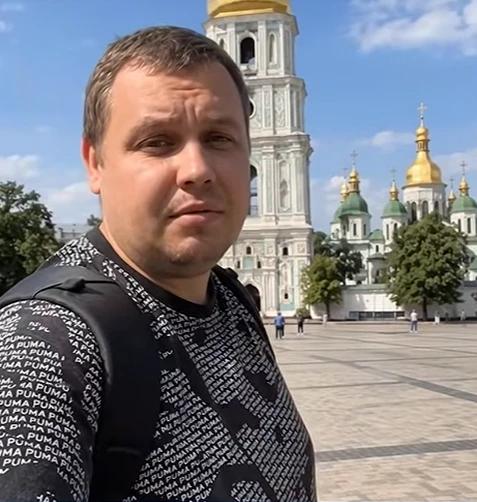
To create these fakes, Russia exploits the images of real individuals. For instance, the likeness of Vinnytsia blogger Ruslan Sylyan, who moved to Moldova, was used in propaganda materials. While there is no direct evidence of his cooperation with Russia, bot farms actively promote content about "successful escapes" from Ukraine to demoralize those subject to mobilization. Furthermore, AI allows for easy translation into English and German to target international audiences.
Mobilization Myths and International Impact
A specific focus of the campaign is the discredit of the mobilization process. Investigators found a video featuring a supposed 23-year-old AFU recruit crying about being forcibly sent to the front. Fact-checkers discovered that the face belonged to a Russian streamer. Despite the fact that men under 25 are not subject to forced mobilization in Ukraine, such videos are widely shared in the West to advocate for cutting military aid.
"Russian bot farms pick up content about fleeing Ukraine and use it as a tool to split society," the CCD emphasized.
Simultaneously, Russia is targeting European audiences to turn them against Ukrainian refugees by portraying them as "welfare dependents" or aggressive outsiders. This is a strategic Kremlin line aimed at weakening international support for Ukraine and creating internal friction within partner nations.
Source Еспресо — espreso.tv/suspilstvo-bizhentsi-proti-tikh-khto-zalishivsya-yak-rosiya-… ↗
Read next
 ⚖️Law & Anti-corruption
Estonian Supreme Court bans smartphone voting for elections
The Estonian Supreme Court has blocked plans to introduce mobile voting apps, citing cybersecurity risks and the lack of state control over private app stores.
 🇺🇦Ukraine
Ukrainian defense industry produces over half of artillery shells for the front
Rheinmetall CEO Armin Papperger stated that Ukrainian facilities now manufacture more than 50% of the artillery ammunition used by the Defense Forces.
 🌍World
China tests new landing tactics against Taiwan: satellites spot 800-meter floating bridge
Chinese military forces conducted drills in Fujian province, testing the construction of an 800-meter floating bridge using civilian vessels to transport heavy equipment.
 🇺🇦Ukraine
Russian army attacks Kremenchuk with drones: casualties include children
On the evening of November 27, Russian forces launched a drone strike on Kremenchuk in the Poltava region. Four civilians were injured, including three children.
 ⚖️Law & Anti-corruption
NABU Director Semen Kryvonos responds to criticism over skipping parliamentary commission hearings
Semen Kryvonos explained his absence from the Verkhovna Rada's temporary investigative commission hearings by citing foreign business trips and alleged pressure on anti-c…
 🇪🇺Europe & EU
Remains of Polish Army soldiers killed in 1939 reburied in Lviv region
A ceremony was held in the Lviv region to rebury 115 Polish Army soldiers who died during the 1939 defense of Lviv.