Russia uses Shahed drones for reconnaissance and relay, Ukrainian Air Force reports
Russian forces are upgrading Shahed strike drones, transforming them into multi-role platforms capable of conducting reconnaissance and signal relay.
 🛡️War & Security
Photo: Укрінформ
Key points
- Shahed drones are being adapted with payloads for reconnaissance and signal relay.
- Ukrainian air defenses maintain an interception rate close to 90%.
- Electronic warfare and short-range air defense are pivotal amid strategic missile shortages.
- Adversaries utilize advanced networking systems for real-time drone control.
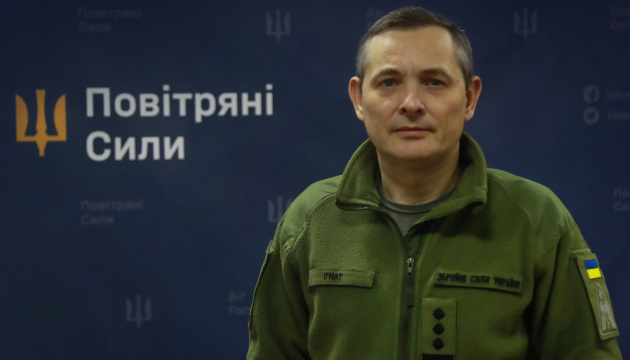
The Russian military continues to adapt its drone warfare tactics, utilizing Shahed-type loitering munitions not only for direct strikes but also for supplementary tactical tasks. According to Ukrainian Air Force Spokesperson Yuriy Ihnat, these unmanned aerial vehicles are being equipped with various payloads, effectively turning them into reconnaissance assets, strike drones, or communication signal relays.
Technological evolution and emerging threats
The aggressor frequently tests new modifications, including faster models like the Geran-5, compelling Ukraine to scale up its countermeasures. Opposing forces also rely on alternative navigation methods and communication setups, such as mesh networks, which could theoretically allow operators to control the drones in real-time from enemy territory.
Although Ukraine's air defense system demonstrates high efficiency by intercepting nearly 90 percent of incoming enemy targets, achieving a 100 percent success rate across such a vast territory remains physically impossible. The remaining drones continue to reach their destinations, causing significant infrastructure damage and endangering civilian lives, with some projectiles occasionally threatening neighboring NATO member states.
Defense priorities: Electronic warfare and short-range air defense
Facing a shortage of high-demand interceptor missiles for systems like Patriot, Ukraine is increasingly relying on asymmetric defense measures. Electronic warfare systems and short-range air defense units—ranging from mobile fire teams to anti-aircraft gun crews—have become critical components in countering the threat.
«Потужно працює сьогодні РЕБ. Ну і також на мала ППО — це те, що сьогодні дозволяє теж збивати», — noted Yuriy Ihnat regarding current defense strategies.
Ukrainian defense specialists are actively addressing these technological shifts to neutralize remote-piloting risks and enhance the overall resilience of the nation's airspace.
Source Укрінформ — ukrinform.ua/rubric-ato/4186709-rf-vikoristovue-sahedi-ak-rozvidnik… ↗
Read next
 ⚖️Law & Anti-corruption
Estonian Supreme Court bans smartphone voting for elections
The Estonian Supreme Court has blocked plans to introduce mobile voting apps, citing cybersecurity risks and the lack of state control over private app stores.
 🇺🇦Ukraine
Ukrainian defense industry produces over half of artillery shells for the front
Rheinmetall CEO Armin Papperger stated that Ukrainian facilities now manufacture more than 50% of the artillery ammunition used by the Defense Forces.
 🌍World
China tests new landing tactics against Taiwan: satellites spot 800-meter floating bridge
Chinese military forces conducted drills in Fujian province, testing the construction of an 800-meter floating bridge using civilian vessels to transport heavy equipment.
 🇺🇦Ukraine
Russian army attacks Kremenchuk with drones: casualties include children
On the evening of November 27, Russian forces launched a drone strike on Kremenchuk in the Poltava region. Four civilians were injured, including three children.
 ⚖️Law & Anti-corruption
NABU Director Semen Kryvonos responds to criticism over skipping parliamentary commission hearings
Semen Kryvonos explained his absence from the Verkhovna Rada's temporary investigative commission hearings by citing foreign business trips and alleged pressure on anti-c…
 🇪🇺Europe & EU
Remains of Polish Army soldiers killed in 1939 reburied in Lviv region
A ceremony was held in the Lviv region to rebury 115 Polish Army soldiers who died during the 1939 defense of Lviv.