Strike on Crimean Bridge Highlights New Capabilities of Ukrainian Long-Range Operations — Analyst
The mid-November operations against the Crimean Bridge demonstrated Ukraine's ability to maintain high daily strike intensities inside Russia without pausing to stockpile resources.
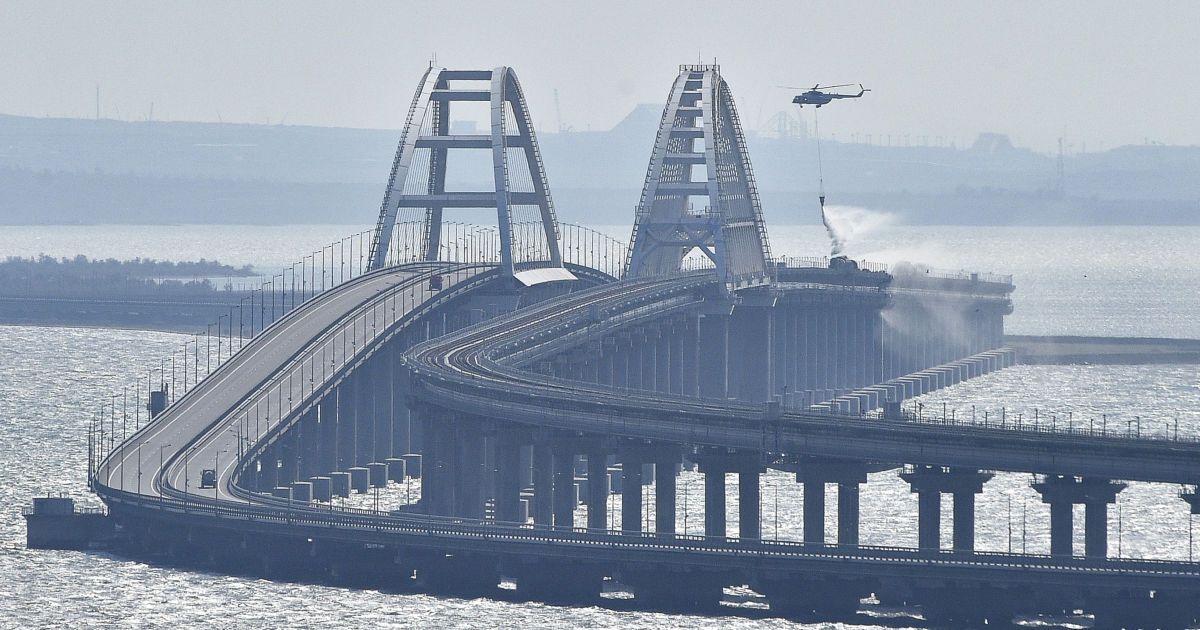 🛡️War & Security
Photo: ТСН
Key points
- Strikes on the Crimean Bridge occurred on November 16 and 17, damaging the road span.
- Ukraine did not pause for resource stockpiling, continuing daily attacks on Russian refineries and military sites.
- Neptune missiles and drones were used without disclosing exact arsenal details.
- Experts note a qualitative shift in the Armed Forces' ability to combine massive daily strikes with special operations.
The operation conducted by Ukraine's Defense Forces against the Crimean Bridge in mid-November highlighted qualitatively new capabilities within the Ukrainian military and defense sector. Military analyst Yigal Levin pointed to this development while evaluating the aftermath of the strikes on the strategic crossing on November 16 and 17, which critically damaged and caused a section of the road deck to collapse into the water.
A New Tactic Without Operational Pauses
A key feature of the preparation for this large-scale operation was the absence of traditional pauses typically seen in the Russian-Ukrainian war. Usually, Russian forces employ a tactic of accumulating strike assets for weeks before launching a massive assault. However, ahead of the Crimean Bridge attack, Ukrainian troops did not halt their systematic daily strikes against other vital military and industrial targets deep inside Russia.
For these daily engagements, the Defense Forces actively utilized a variety of weapons, ranging from domestic Neptune anti-ship missiles to a broad assortment of attack drones. Russian oil refineries, naval vessels, aircraft, infrastructure bridges, and military-industrial facilities were regularly targeted. Despite this high and continuous intensity, the Ukrainian command successfully preserved sufficient potential to execute a complex special operation.
A Qualitative Leap for the Defense Forces
According to the analyst, over the past six months, the Ukrainian army has made a noticeable qualitative leap. Not only has the quantitative volume of long-range strikes increased, but their overall strategic level and potency have grown as well. Ukrainian forces are now capable of simultaneously maintaining steady pressure on the enemy's rear while building strategic reserves for targeted special operations.
At the same time, the expert did not provide official figures regarding arsenal volumes or the exact number of missiles and drones used. Meanwhile, analysts note that the November strikes against the crossing will significantly complicate the logistics and supply lines of Russian military groupings in the southern sector of the frontline.
Source ТСН — tsn.ua/ato/udar-po-krymskomu-mostu-pokazav-novi-mozlyvosti-ukrayiny-viy… ↗
Read next
 ⚖️Law & Anti-corruption
Estonian Supreme Court bans smartphone voting for elections
The Estonian Supreme Court has blocked plans to introduce mobile voting apps, citing cybersecurity risks and the lack of state control over private app stores.
 🇺🇦Ukraine
Ukrainian defense industry produces over half of artillery shells for the front
Rheinmetall CEO Armin Papperger stated that Ukrainian facilities now manufacture more than 50% of the artillery ammunition used by the Defense Forces.
 🌍World
China tests new landing tactics against Taiwan: satellites spot 800-meter floating bridge
Chinese military forces conducted drills in Fujian province, testing the construction of an 800-meter floating bridge using civilian vessels to transport heavy equipment.
 🇺🇦Ukraine
Russian army attacks Kremenchuk with drones: casualties include children
On the evening of November 27, Russian forces launched a drone strike on Kremenchuk in the Poltava region. Four civilians were injured, including three children.
 ⚖️Law & Anti-corruption
NABU Director Semen Kryvonos responds to criticism over skipping parliamentary commission hearings
Semen Kryvonos explained his absence from the Verkhovna Rada's temporary investigative commission hearings by citing foreign business trips and alleged pressure on anti-c…
 🇪🇺Europe & EU
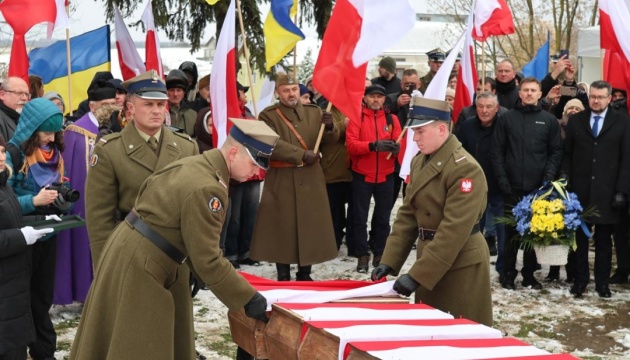
Remains of Polish Army soldiers killed in 1939 reburied in Lviv region
A ceremony was held in the Lviv region to rebury 115 Polish Army soldiers who died during the 1939 defense of Lviv.