Kerch Bridge: A History of Strategic Failures and New Ukrainian Strikes
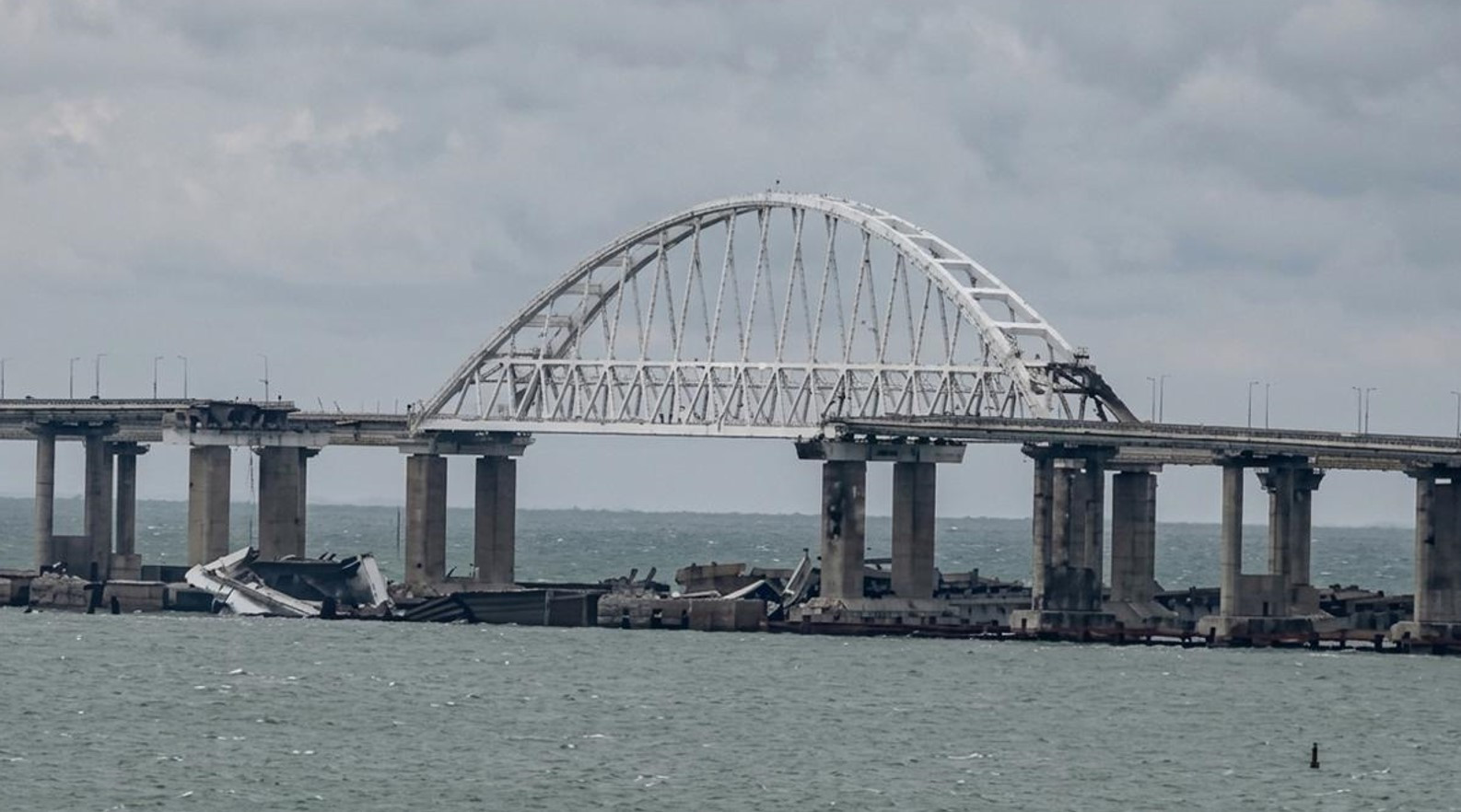
Ukrainian Defense Forces conducted a multi-stage operation targeting the Crimean Bridge, damaging a road section and an arch in a significant blow to Russian logistics.
 🛡️War & Security
Photo: Еспресо
Key points
- A multi-stage SBU and AFU operation successfully damaged the bridge's road section and arch.
- Historical attempts by Nazi Germany and the USSR to bridge the strait failed due to environmental factors.
- The bridge remains the essential logistical link for Russian military operations in southern Ukraine.
On the night of November 17, the Ukrainian Defense Forces executed a sophisticated operation against the Kerch Bridge. According to the SBU and the General Staff of the AFU, the mission was a month in the making and involved seven distinct stages. The strike resulted in a portion of the roadbed and one of the structural arches collapsing into the sea. Russian authorities acknowledged the damage, halted traffic, and labeled the incident a «terrorist act» while promising reconstruction.
A Century of Infrastructure Failures
The Kerch Strait has long been a graveyard for engineering ambitions. At the beginning of the 20th century, Tsar Nicholas II explored the possibility of a bridge, but the project was deemed too costly and technically challenging due to thick silt layers and drifting ice. These plans were ultimately buried by the outbreak of World War I and the subsequent revolution.
During World War II, Adolf Hitler ordered the construction of a bridge to facilitate a breakthrough into the Caucasus. Nazi engineers managed to build a cable car and about a third of the bridge before being forced to retreat. The Soviet Union later completed a temporary railway bridge in 1944 using captured German materials, but it stood for only a few months. In February 1945, drifting ice from the Sea of Azov destroyed over 40 piers, leading the Soviet government to abandon the project as impractical.
Symbolic Target and Military Artery
The modern bridge, completed under Vladimir Putin's orders following the annexation of Crimea, serves as both a political symbol and a vital military supply line. While the Kremlin maintains the bridge is for civilian use, it remains the primary route for transporting fuel, ammunition, and heavy equipment to Russian forces in southern Ukraine. Recent attempts to protect the structure with barge barricades proved ineffective against Ukrainian maritime drones.
This latest strike marks a shift in the conflict's dynamics. For a long time, bridges were treated as unofficial «red lines.» However, following Russian strikes on bridges in Kyiv, Ukraine has responded by systematically targeting Russia's most critical logistical nodes. The era of bridge immunity appears to have ended as both sides target strategic infrastructure.
Source Еспресо — espreso.tv/viyna-z-rosiyeyu-gitler-ne-dobuduvav-stalin-ne-vberig-putin-… ↗
Read next
 ⚖️Law & Anti-corruption
Estonian Supreme Court bans smartphone voting for elections
The Estonian Supreme Court has blocked plans to introduce mobile voting apps, citing cybersecurity risks and the lack of state control over private app stores.
 🇺🇦Ukraine
Ukrainian defense industry produces over half of artillery shells for the front
Rheinmetall CEO Armin Papperger stated that Ukrainian facilities now manufacture more than 50% of the artillery ammunition used by the Defense Forces.
 🌍World
China tests new landing tactics against Taiwan: satellites spot 800-meter floating bridge
Chinese military forces conducted drills in Fujian province, testing the construction of an 800-meter floating bridge using civilian vessels to transport heavy equipment.
 🇺🇦Ukraine
Russian army attacks Kremenchuk with drones: casualties include children
On the evening of November 27, Russian forces launched a drone strike on Kremenchuk in the Poltava region. Four civilians were injured, including three children.
 ⚖️Law & Anti-corruption
NABU Director Semen Kryvonos responds to criticism over skipping parliamentary commission hearings
Semen Kryvonos explained his absence from the Verkhovna Rada's temporary investigative commission hearings by citing foreign business trips and alleged pressure on anti-c…
 🇪🇺Europe & EU
Remains of Polish Army soldiers killed in 1939 reburied in Lviv region
A ceremony was held in the Lviv region to rebury 115 Polish Army soldiers who died during the 1939 defense of Lviv.