Amazon’s Starlink Rival Suffers Major Blow as Vulcan Rocket Fails
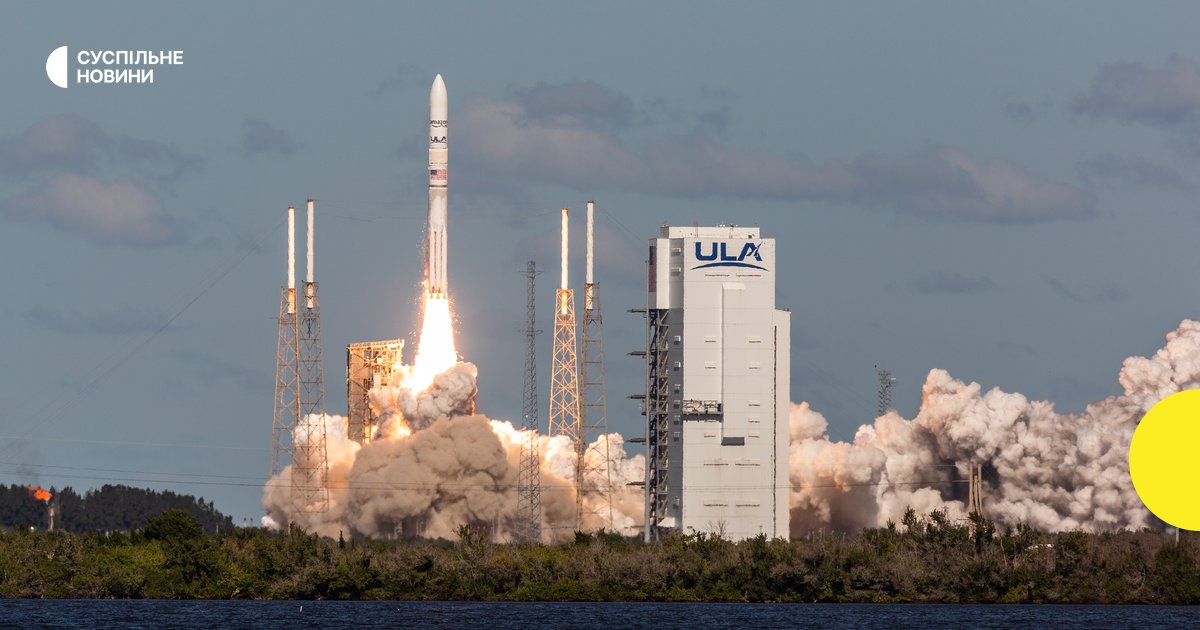
A ULA Vulcan rocket carrying 40 Amazon Leo satellites failed shortly after launch, marking a significant setback for Jeff Bezos’s space internet ambitions.
 🇺🇸USA
Photo: Суспільне
Key points
- ULA's Vulcan rocket failed 10 minutes into its mission, losing 40 Amazon satellites.
- The failure impacts the U.S. military's plans to use Vulcan for national security launches.
- Amazon remains far behind SpaceX, having deployed only 12% of its planned constellation.
A launch failure of the new American Vulcan rocket has resulted in the destruction of 40 Amazon Leo satellites intended for a global internet network. United Launch Alliance (ULA) confirmed that an anomaly occurred 10 minutes after liftoff from Cape Canaveral on November 15, preventing the mission from reaching orbit. This incident represents a major setback for Amazon's efforts to compete with SpaceX's Starlink system.
Technical Setbacks and National Security Impact
Preliminary reports suggest the failure occurred after the separation of the rocket's first stage. The Vulcan utilizes BE-4 engines manufactured by Blue Origin, which have previously undergone modifications following a test explosion in May. While ULA is considered a reliable partner, this failure is expected to trigger a months-long technical investigation, grounding the rocket during a critical period.
"Every flight provides data, and every flight teaches us something. Since the anomaly just occurred, we do not yet have specific data to understand what happened today," ULA stated.
The situation is further complicated by the Pentagon's pending certification of the Vulcan for national security missions. The U.S. military was monitoring this specific launch to determine if the rocket was ready for strategic deployment. The failure exacerbates a growing shortage of launch capacity in the U.S., caused by the phased retirement of the Falcon 9 and technical issues across the industry.
The Race Against SpaceX
To date, Amazon has deployed only about 12% of its planned 3,236-satellite constellation. In contrast, Elon Musk’s Starlink already operates over 11,000 satellites. While competitors spend billions on third-party launches, SpaceX benefits from using its own rockets and the ongoing development of the Starship system, maintaining a significant economic and technological lead in the sector.
Source Суспільне — suspilne.media/1453401-konkurent-starlink-vid-amazon-vtrativ-40-suputni… ↗
Read next
 🛡️War & Security
Russian command threatens officers with assault duty due to falsified frontline reports
Due to discrepancies between the actual situation on the Zaporizhzhia front and reports submitted to senior leadership, Russian officers are facing threats of being sent …
 ⚖️Law & Anti-corruption
Estonian Supreme Court bans smartphone voting for elections
The Estonian Supreme Court has blocked plans to introduce mobile voting apps, citing cybersecurity risks and the lack of state control over private app stores.
 🇺🇦Ukraine
Ukrainian defense industry produces over half of artillery shells for the front
Rheinmetall CEO Armin Papperger stated that Ukrainian facilities now manufacture more than 50% of the artillery ammunition used by the Defense Forces.
 🌍World
China tests new landing tactics against Taiwan: satellites spot 800-meter floating bridge
Chinese military forces conducted drills in Fujian province, testing the construction of an 800-meter floating bridge using civilian vessels to transport heavy equipment.
 🇺🇦Ukraine
Russian army attacks Kremenchuk with drones: casualties include children
On the evening of November 27, Russian forces launched a drone strike on Kremenchuk in the Poltava region. Four civilians were injured, including three children.
 ⚖️Law & Anti-corruption
NABU Director Semen Kryvonos responds to criticism over skipping parliamentary commission hearings
Semen Kryvonos explained his absence from the Verkhovna Rada's temporary investigative commission hearings by citing foreign business trips and alleged pressure on anti-c…