Veteran Employment in Municipal Security: A Debate on State Policy and the Ministry for Veterans
The employment of veterans within Kyiv's municipal security structure has sparked a broader debate over the effectiveness of state reintegration policies.
 🇺🇦Ukraine
Photo: Українська правда — головне
Key points
- Debate surrounding veteran employment in municipal security structures.
- Criticism of current state reintegration and retraining programs.
- The necessity of leveraging military leadership and skills in the civilian economy.
The ongoing discussion regarding the future of Kyiv's municipal security guard has highlighted deep-seated issues concerning the employment and reintegration of Ukrainian veterans returning from the frontline. While defenders of the municipal structure argue that it provides jobs for former soldiers, critics point out that veterans account for only a minor fraction of the total staff.
A primary concern raised by experts is that the valuable combat, logistical, and managerial experience gained by service members is frequently underutilized, often being reduced to basic security or physical enforcement roles. Critics argue that neither local authorities nor state agencies have managed to establish a comprehensive transition system from military service to civilian professions.
Scrutiny Over State Policy and Veteran Affairs
Particular attention is directed toward the Ministry for Veterans Affairs and its leadership. Although the agency has reported on initiatives aimed at job creation and professional retraining, observers question the long-term sustainability of such employment, especially for wounded or disabled veterans.
- Out of more than 1,400 municipal security employees, only a small percentage hold official veteran status.
- Government support programs must focus on secure, long-term career development rather than temporary occupation.
- Experts demand actionable strategies from the ministry rather than mere statistical reports.
Relying on the presence of veterans to shield municipal structures from criticism reveals systemic shortcomings in national veteran policy.
Analysts emphasize that successfully integrating former military personnel into the civilian workforce requires coordinated efforts between the government, local authorities, and the private sector. Without robust mechanisms to translate military skills into civilian industries, veterans risk facing prolonged employment hurdles.
Source Українська правда — головне — pravda.com.ua/columns/2026/11/16/8063077/ ↗
Read next
 🛡️War & Security
Russian command threatens officers with assault duty due to falsified frontline reports
Due to discrepancies between the actual situation on the Zaporizhzhia front and reports submitted to senior leadership, Russian officers are facing threats of being sent …
 ⚖️Law & Anti-corruption
Estonian Supreme Court bans smartphone voting for elections
The Estonian Supreme Court has blocked plans to introduce mobile voting apps, citing cybersecurity risks and the lack of state control over private app stores.
 🌍World
China tests new landing tactics against Taiwan: satellites spot 800-meter floating bridge
Chinese military forces conducted drills in Fujian province, testing the construction of an 800-meter floating bridge using civilian vessels to transport heavy equipment.
 ⚖️Law & Anti-corruption
NABU Director Semen Kryvonos responds to criticism over skipping parliamentary commission hearings
Semen Kryvonos explained his absence from the Verkhovna Rada's temporary investigative commission hearings by citing foreign business trips and alleged pressure on anti-c…
 🇪🇺Europe & EU
Remains of Polish Army soldiers killed in 1939 reburied in Lviv region
A ceremony was held in the Lviv region to rebury 115 Polish Army soldiers who died during the 1939 defense of Lviv.
 🇪🇺Europe & EU
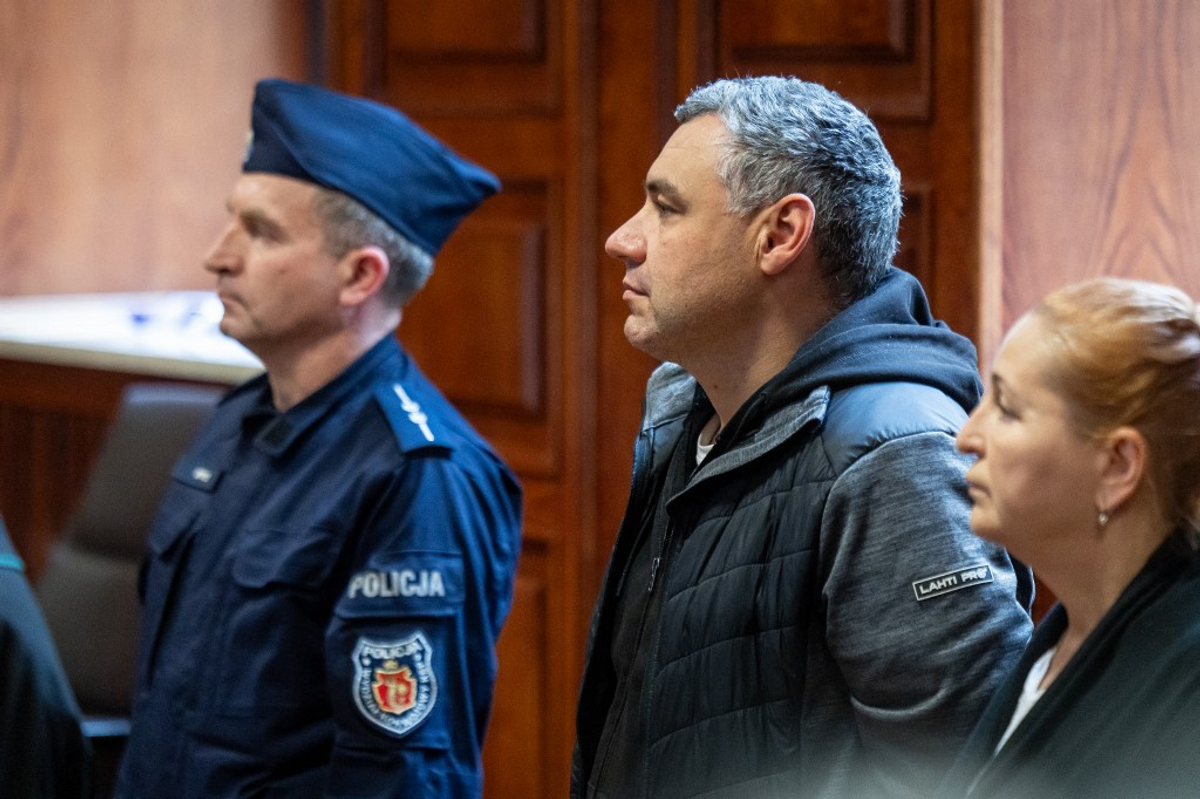
Croatian Court Overturns Extradition of Nord Stream Sabotage Suspect to Germany
Croatia’s High Criminal Court has ordered a retrial for Ukrainian diver Volodymyr Zhuravlov, who is wanted by Germany over the 2022 Nord Stream pipeline blasts.