Lithuania Denies Involvement in Drone Attacks on Russia's Kaliningrad Region
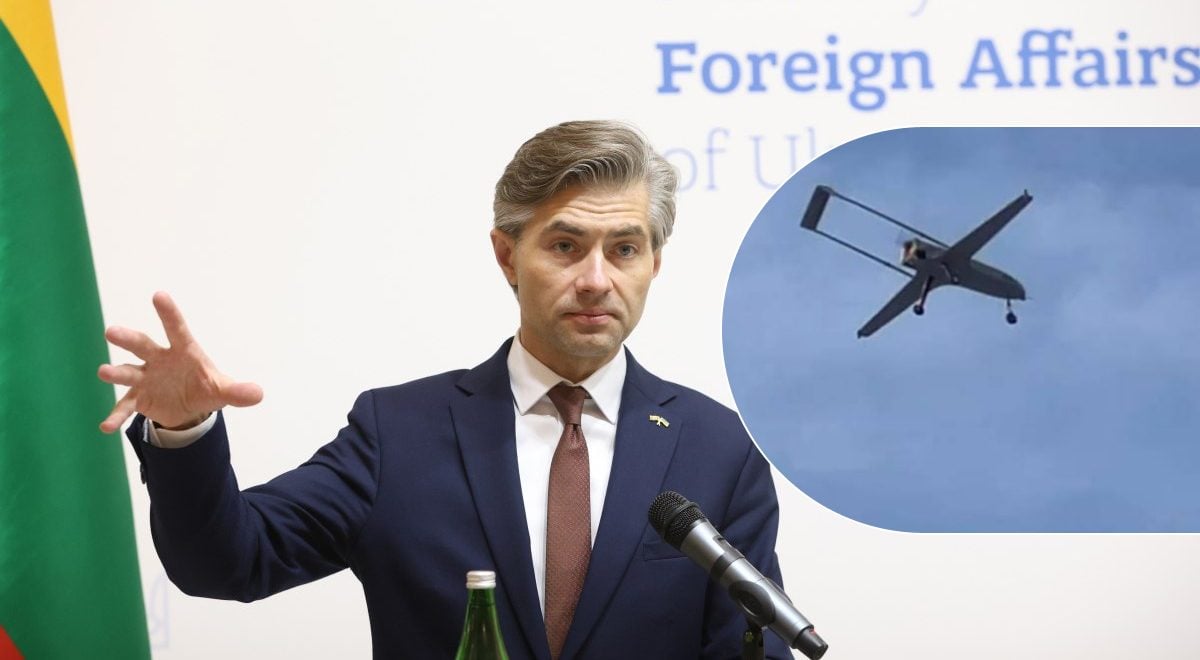
The Lithuanian Foreign Ministry has officially rejected claims of the country's participation in drone strikes targeting the Baltic Fleet's naval base.
 🇪🇺Europe & EU
Photo: Главред
Key points
- Lithuania officially denied launching drones from its territory toward the Kaliningrad region.
- Explosions were recorded in Baltiysk near the Russian Baltic Fleet's naval base.
- Experts warn that the Kremlin is laying the information groundwork for aggression against Baltic nations.
Official Vilnius has issued a sharp denial of Russian allegations regarding Lithuania's supposed involvement in a drone attack on the Kaliningrad region. Lithuanian Foreign Minister Kęstutis Budrys emphasized that the country has no connection to the incidents that occurred near strategic facilities of the Russian Baltic Fleet.
Lithuanian Diplomatic Stance
The reaction from the Lithuanian Foreign Ministry came after versions of drone launches from the territory of a NATO member state began circulating in the Russian information space. Kęstutis Budrys, writing on social media platform X, labeled these claims as "false" and noted that Lithuania strictly adheres to international norms. According to him, the state has never allowed its airspace to be used for any attacks on the territory of the Russian Federation.
The situation in the Kaliningrad region escalated on the evening of November 21, when an air raid alert was declared. Local residents reported a series of explosions in Baltiysk, home to the main naval base of the Baltic Fleet. Russian authorities, including Governor Alexey Besprozvannykh, claimed "suspicious objects" were approaching from Lithuania, though they later asserted that no threat was ultimately found.
Information Warfare and Potential Escalation
Experts view such accusations from the Kremlin as signs of preparation for a broader conflict with the Baltic states. Volodymyr Horbach, Executive Director of the Institute for the Transformation of Northern Eurasia, notes that Moscow traditionally employs the tactic of accusing opponents of planning an attack to justify its own aggression. In his view, the likelihood of Russia conducting "special operations" against Lithuania, Latvia, or Estonia is currently higher than in previous years.
As a result of the incident in Kaliningrad, operations at Khrabrovo Airport were temporarily restricted, and disruptions to mobile internet were reported. Despite attempts by the Russian side to minimize the consequences, monitoring channels confirmed the activation of air defense systems and explosions in areas where military infrastructure is concentrated.
Source Главред — glavred.net/war/ataki-dronov-na-kaliningradskuyu-oblast-rf-v-litve-otve… ↗
Read next
 🛡️War & Security
Russian command threatens officers with assault duty due to falsified frontline reports
Due to discrepancies between the actual situation on the Zaporizhzhia front and reports submitted to senior leadership, Russian officers are facing threats of being sent …
 ⚖️Law & Anti-corruption
Estonian Supreme Court bans smartphone voting for elections
The Estonian Supreme Court has blocked plans to introduce mobile voting apps, citing cybersecurity risks and the lack of state control over private app stores.
 🇺🇦Ukraine
Ukrainian defense industry produces over half of artillery shells for the front
Rheinmetall CEO Armin Papperger stated that Ukrainian facilities now manufacture more than 50% of the artillery ammunition used by the Defense Forces.
 🌍World
China tests new landing tactics against Taiwan: satellites spot 800-meter floating bridge
Chinese military forces conducted drills in Fujian province, testing the construction of an 800-meter floating bridge using civilian vessels to transport heavy equipment.
 🇺🇦Ukraine
Russian army attacks Kremenchuk with drones: casualties include children
On the evening of November 27, Russian forces launched a drone strike on Kremenchuk in the Poltava region. Four civilians were injured, including three children.
 ⚖️Law & Anti-corruption
NABU Director Semen Kryvonos responds to criticism over skipping parliamentary commission hearings
Semen Kryvonos explained his absence from the Verkhovna Rada's temporary investigative commission hearings by citing foreign business trips and alleged pressure on anti-c…