AI Reconstructs Tisza River Landscape from Habsburg Era: How State Engineering Reshaped Central Europe
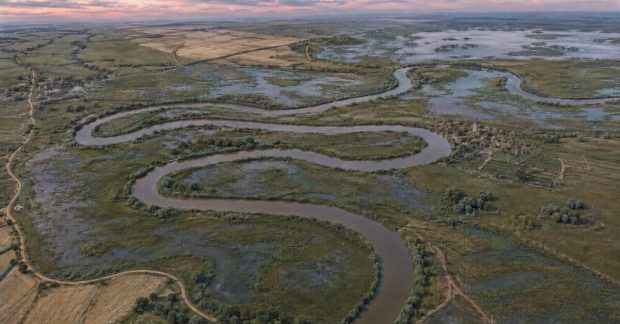
Researchers at Eötvös Loránd University have used AI and historical maps to visualize the Great Hungarian Plain before 19th-century state-led river regulation shortened the Tisza by 450 kilometers.
 🇪🇺Europe & EU
Photo: УНІАН
Key points
- The Tisza River was shortened by 450 km during 19th-century state-led engineering projects.
- Forest coverage in the region dropped from 37% to 1% due to historical land reclamation.
- Current drought conditions threaten the operation of Hungary's Paks Nuclear Power Plant.
Scientists from Eötvös Loránd University (ELTE) in Budapest have unveiled a digital reconstruction of the Great Hungarian Plain's ecosystem. By integrating historical maps, modern drone imagery, and artificial intelligence, they have demonstrated the profound impact of large-scale hydrological interventions carried out during the Austro-Hungarian Empire.
Historical Context and Environmental Transformation
Prior to the major reclamation projects of the 19th century, the Tisza River was 453 kilometers longer than it is today, characterized by numerous meanders and an extensive network of floodplains. The Habsburg Monarchy's state policy aimed to straighten the riverbed to reclaim approximately 40,000 square kilometers of land for agricultural use. This resulted in the river's length shrinking from 1,211 to 758 kilometers.
The environmental consequences were drastic for the region's biodiversity. According to the researchers, forest coverage in the Great Hungarian Plain plummeted from 37% to less than 1%. Similarly, the area of wet meadows and marshes saw a sharp decline from 44% to a mere 3–6%. The cessation of regular flooding fundamentally altered the landscape, leading to the disappearance of vast natural habitats.
Modern Implications for Energy Security
Today, the legacy of historical river regulation exacerbates the challenges posed by climate change. Critical water level drops in the Danube and Tisza are already threatening strategic infrastructure. For instance, extreme heat and low water levels recently complicated the cooling of reactors at Hungary's Paks Nuclear Power Plant, forcing authorities to implement emergency measures.
The AI-driven models developed by ELTE are intended not only for historical study but also for predicting the outcomes of wetland restoration projects. Such initiatives are becoming vital for mitigating the effects of severe droughts, which pose a direct threat to both agricultural productivity and regional energy stability.
Source УНІАН — unian.ua/science/tisa-200-rokiv-tomu-vcheni-vidtvorili-richku-do-ma… ↗
Read next
 🛡️War & Security
Russian command threatens officers with assault duty due to falsified frontline reports
Due to discrepancies between the actual situation on the Zaporizhzhia front and reports submitted to senior leadership, Russian officers are facing threats of being sent …
 ⚖️Law & Anti-corruption
Estonian Supreme Court bans smartphone voting for elections
The Estonian Supreme Court has blocked plans to introduce mobile voting apps, citing cybersecurity risks and the lack of state control over private app stores.
 🇺🇦Ukraine
Ukrainian defense industry produces over half of artillery shells for the front
Rheinmetall CEO Armin Papperger stated that Ukrainian facilities now manufacture more than 50% of the artillery ammunition used by the Defense Forces.
 🌍World
China tests new landing tactics against Taiwan: satellites spot 800-meter floating bridge
Chinese military forces conducted drills in Fujian province, testing the construction of an 800-meter floating bridge using civilian vessels to transport heavy equipment.
 🇺🇦Ukraine
Russian army attacks Kremenchuk with drones: casualties include children
On the evening of November 27, Russian forces launched a drone strike on Kremenchuk in the Poltava region. Four civilians were injured, including three children.
 ⚖️Law & Anti-corruption
NABU Director Semen Kryvonos responds to criticism over skipping parliamentary commission hearings
Semen Kryvonos explained his absence from the Verkhovna Rada's temporary investigative commission hearings by citing foreign business trips and alleged pressure on anti-c…