EU Intensifies Fight Against Sanctions Evasion by Russia, Focusing on Cryptocurrencies
The European Union is stepping up efforts to prevent the circumvention of sanctions against Russia, establishing a new office and a working group specifically targeting cryptocurrencies. These measures aim to enhance the coordination and effectiveness of sanctions policy.
 💶Economy & Sanctions
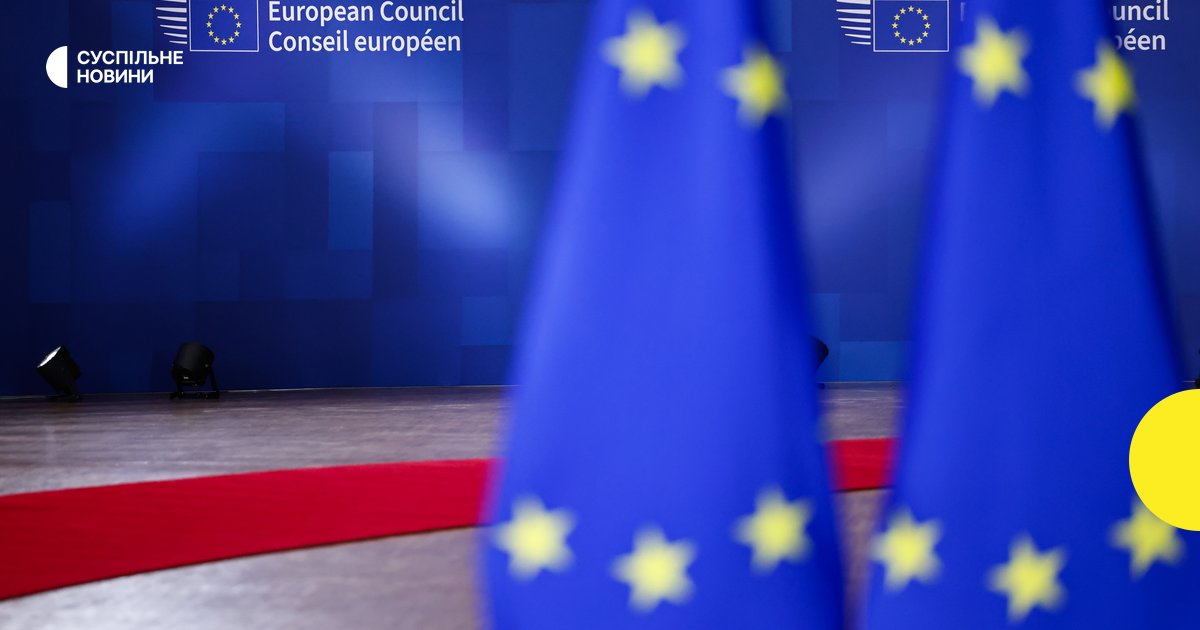
Photo: Суспільне
Key points
- EU established a new sanctions office to coordinate policy.
- A working group launched to prevent sanctions evasion via cryptocurrencies.
- New structures will enhance data sharing and analysis for effective sanctions.
- Switzerland joined parts of the 21st sanctions package.
- The EU is preparing its 22nd sanctions package against Russia.
The European Commission has announced the creation of a dedicated sanctions office and a separate working group tasked with preventing the use of cryptocurrencies to bypass restrictive measures against Russia. These initiatives are part of broader EU efforts to strengthen oversight of sanctions enforcement and their overall effectiveness.
New Office for Sanctions Coordination
European Commission spokesperson Siobhán Mcgarry stated on November 6 that the new office will operate within the Commission's structure. Its primary role will be to coordinate sanctions policy at all stages, from the development of new restrictions to monitoring their implementation and countering evasion attempts. European Commissioner for Financial Services, Mairead McGuinness, had previously announced the office's establishment on November 5, following a meeting with EU member state representatives and international partners.
According to Mcgarry, the office will provide member states with faster access to guidance, improve data sharing, and offer economic and technical analysis. This is expected to foster a more harmonized application of sanctions across the European Union.
Cryptocurrency Working Group
Separately, the European Commission announced the formation of an informal working group focused on cryptocurrency-related issues. Its objective is to develop mechanisms to prevent the use of digital assets for sanctions evasion. Mcgarry noted that cryptocurrencies have already been used for such purposes, and the group will bring together experts from the European Commission and EU member states to eliminate these possibilities. According to The Kyiv Independent, the group's work is initially planned for 12 months, with plans to involve experts from third countries, including Ukraine and the United Kingdom.
These new structures were announced after a series of meetings dedicated to sanctions implementation, where discussions also covered limiting Russia's financing through third-country payment networks, methods used by the Russian military-industrial complex to evade sanctions, Russian energy exports, and the activities of its shadow fleet.
“Cryptocurrencies have already been used to circumvent sanctions,” stated European Commission spokesperson Siobhán Mcgarry, underscoring the urgency of establishing the new working group.
The EU is also actively preparing its 22nd package of sanctions against Russia. Previously, on July 23, 2026, the Council of the European Union approved the 21st package, which covered over 100 banks and cryptocurrency operators, as well as 41 tankers belonging to Russia's shadow fleet. On November 6, Switzerland joined parts of the 21st sanctions package, prohibiting transactions involving 33 Russian banks and 17 cryptocurrency services.
Source Суспільне — suspilne.media/1447137-es-posilue-borotbu-z-obhodom-sankcij-proti-rosii… ↗
Read next
 🛡️War & Security
Russian command threatens officers with assault duty due to falsified frontline reports
Due to discrepancies between the actual situation on the Zaporizhzhia front and reports submitted to senior leadership, Russian officers are facing threats of being sent …
 ⚖️Law & Anti-corruption
Estonian Supreme Court bans smartphone voting for elections
The Estonian Supreme Court has blocked plans to introduce mobile voting apps, citing cybersecurity risks and the lack of state control over private app stores.
 🇺🇦Ukraine
Ukrainian defense industry produces over half of artillery shells for the front
Rheinmetall CEO Armin Papperger stated that Ukrainian facilities now manufacture more than 50% of the artillery ammunition used by the Defense Forces.
 🌍World
China tests new landing tactics against Taiwan: satellites spot 800-meter floating bridge
Chinese military forces conducted drills in Fujian province, testing the construction of an 800-meter floating bridge using civilian vessels to transport heavy equipment.
 🇺🇦Ukraine
Russian army attacks Kremenchuk with drones: casualties include children
On the evening of November 27, Russian forces launched a drone strike on Kremenchuk in the Poltava region. Four civilians were injured, including three children.
 ⚖️Law & Anti-corruption
NABU Director Semen Kryvonos responds to criticism over skipping parliamentary commission hearings
Semen Kryvonos explained his absence from the Verkhovna Rada's temporary investigative commission hearings by citing foreign business trips and alleged pressure on anti-c…