Economic Interest Over Peace: Expert Reveals True Goal of Kremlin's Negotiation Maneuvers
Russia is using talk of negotiations and threats of escalation as a tool to regain access to its frozen assets in Europe.
 💶Economy & Sanctions
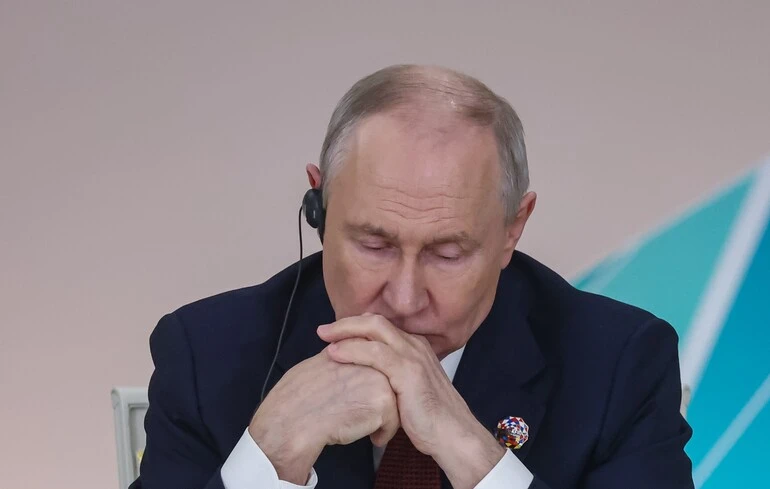
Photo: Дзеркало тижня
Key points
- The primary goal of Russian diplomacy is the return of €210 billion in frozen assets.
- Hybrid warfare against the West requires resources that the Kremlin increasingly lacks.
- Moscow's peace initiatives may serve as a smokescreen for financial blackmail.
Oleksiy Izhak, head of a department at the National Institute for Strategic Studies, argues that the Kremlin's calls for negotiations are merely a cover for attempts to regain access to financial resources. Moscow's primary target is approximately €210 billion currently frozen in European jurisdictions.
Frozen Assets as Moscow's Priority
According to the analyst, these funds are critically needed by Russia not only to finance the war in Ukraine but also to sustain its long-term hybrid warfare against Western democracies. Regaining the assets, or even halting the transfer of their yields to Ukraine, would significantly undermine Kyiv's financial stability and provide the Kremlin with new resources for aggression.
The expert recalls previous attempts to find compromise mechanisms for managing these funds. Specifically, the material mentions that in October 2026, Steve Witkoff and Jared Kushner proposed a scheme to European partners for the partial unfreezing of assets under US supervision, but EU representatives rejected the initiative.
Hybrid War Requires Resources
Oleksiy Izhak notes that the full-scale invasion of Ukraine was a strategic failure for Russia's previously successful hybrid strategy. Currently, the Kremlin is prepared to wage hybrid war "forever" but faces a severe funding shortage.
"Frozen Russian assets may very well be the focus of new Russian maneuvers regarding negotiations with Europe. Everything else could be a masking laser show,"the analyst suggests.
Thus, any peace initiatives from the Russian Federation may be nothing more than a tactical move to achieve economic goals, while ignoring Moscow's hybrid threats could have dire consequences for European security.
Source Дзеркало тижня — zn.ua/ukr/WORLD/spravzhnoju-metoju-perehovornikh-manevriv-kremlja-je-ne… ↗
Read next
 🛡️War & Security
Russian command threatens officers with assault duty due to falsified frontline reports
Due to discrepancies between the actual situation on the Zaporizhzhia front and reports submitted to senior leadership, Russian officers are facing threats of being sent …
 ⚖️Law & Anti-corruption
Estonian Supreme Court bans smartphone voting for elections
The Estonian Supreme Court has blocked plans to introduce mobile voting apps, citing cybersecurity risks and the lack of state control over private app stores.
 🇺🇦Ukraine
Ukrainian defense industry produces over half of artillery shells for the front
Rheinmetall CEO Armin Papperger stated that Ukrainian facilities now manufacture more than 50% of the artillery ammunition used by the Defense Forces.
 🌍World
China tests new landing tactics against Taiwan: satellites spot 800-meter floating bridge
Chinese military forces conducted drills in Fujian province, testing the construction of an 800-meter floating bridge using civilian vessels to transport heavy equipment.
 🇺🇦Ukraine
Russian army attacks Kremenchuk with drones: casualties include children
On the evening of November 27, Russian forces launched a drone strike on Kremenchuk in the Poltava region. Four civilians were injured, including three children.
 ⚖️Law & Anti-corruption
NABU Director Semen Kryvonos responds to criticism over skipping parliamentary commission hearings
Semen Kryvonos explained his absence from the Verkhovna Rada's temporary investigative commission hearings by citing foreign business trips and alleged pressure on anti-c…