Abu Dhabi Talks Reach an Impasse: What Moscow Seeks and How the US and EU Respond
Recent four-hour talks in Abu Dhabi on ending the Russia-Ukraine war concluded without concrete results amid divisions between the US, Europe, and the Kremlin's stance.
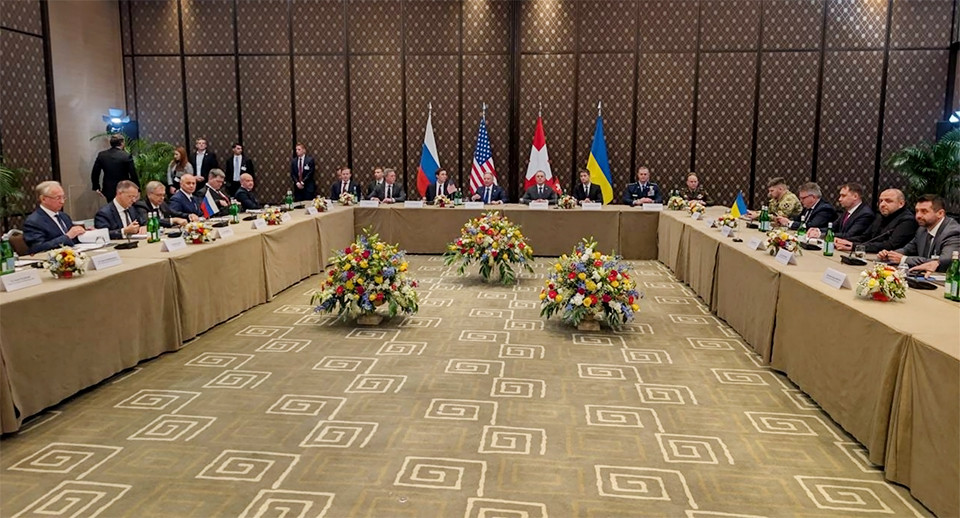 🤝Diplomacy
Photo: Еспресо
Key points
- Abu Dhabi talks lasted four hours and ended without a breakthrough
- The US focused on discussing a new European security architecture
- European diplomats insist on the priority of an immediate ceasefire
- The US Congress announced an inquiry into Starlink communications restrictions
A round of talks aimed at settling the Russia-Ukraine war took place at the five-star Emirates Palace Mandarin Oriental hotel in Abu Dhabi, gathering representatives from Ukraine, Russia, the US, and European nations. One of the most telling episodes of the meeting was a tense standoff between the head of the Ukrainian delegation and Dmitry Minaev, a Russian FSB counterintelligence representative, highlighting the profound mistrust and heavy atmosphere surrounding the event.
Despite four hours of discussions yielding no tangible progress, the administration of US President Donald Trump praised the mere fact that the meeting took place. US special envoys Steve Witkoff and Jared Kushner focused on discussing a new European security architecture, which Le Monde analysts note aligns with Vladimir Putin's goals of weakening NATO and restoring Russian influence.
Meanwhile, European allies voiced concern that such initiatives might sideline an immediate ceasefire. While Russian Foreign Minister Sergey Lavrov publicly dismissed European involvement, representatives from Germany, France, and Great Britain insisted on a clear sequence of steps: a ceasefire first, followed by robust security guarantees for Ukraine, and only then broader peace plans.
President Volodymyr Zelenskyy stressed the importance of keeping both Washington and European capitals engaged in the negotiation process. At the same time, the US Congress has signaled upcoming inquiries into the circumstances surrounding the reported restrictions on Starlink satellite communications for Ukraine, reflecting domestic political oversight over American diplomacy.
Source Еспресо — espreso.tv/viyna-z-rosiyeyu-peregovori-v-abu-dabi-zayshli-v-glukhiy-kut… ↗
Read next
 🛡️War & Security
Russian command threatens officers with assault duty due to falsified frontline reports
Due to discrepancies between the actual situation on the Zaporizhzhia front and reports submitted to senior leadership, Russian officers are facing threats of being sent …
 ⚖️Law & Anti-corruption
Estonian Supreme Court bans smartphone voting for elections
The Estonian Supreme Court has blocked plans to introduce mobile voting apps, citing cybersecurity risks and the lack of state control over private app stores.
 🇺🇦Ukraine
Ukrainian defense industry produces over half of artillery shells for the front
Rheinmetall CEO Armin Papperger stated that Ukrainian facilities now manufacture more than 50% of the artillery ammunition used by the Defense Forces.
 🌍World
China tests new landing tactics against Taiwan: satellites spot 800-meter floating bridge
Chinese military forces conducted drills in Fujian province, testing the construction of an 800-meter floating bridge using civilian vessels to transport heavy equipment.
 🇺🇦Ukraine
Russian army attacks Kremenchuk with drones: casualties include children
On the evening of November 27, Russian forces launched a drone strike on Kremenchuk in the Poltava region. Four civilians were injured, including three children.
 ⚖️Law & Anti-corruption
NABU Director Semen Kryvonos responds to criticism over skipping parliamentary commission hearings
Semen Kryvonos explained his absence from the Verkhovna Rada's temporary investigative commission hearings by citing foreign business trips and alleged pressure on anti-c…