Humanitarian Mission in Oleshky: How Russia Leverages Evacuation for Propaganda
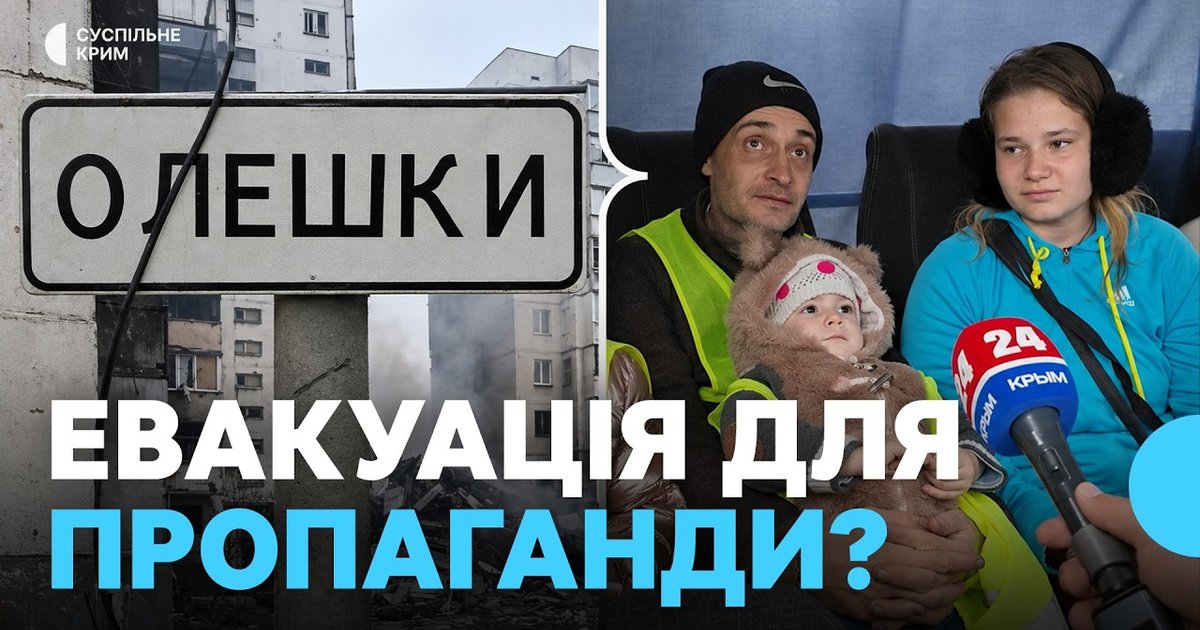
Following the conclusion of the humanitarian operation in occupied Oleshky, experts point to Russia's use of the situation for information warfare and manipulation.
 🤝Diplomacy
Photo: Суспільне
Key points
- Evacuation of civilians as a tool of information warfare
- Russian disinformation regarding consequences of returning to Ukraine
- Use of ceasefire for military objectives
The humanitarian mission in occupied Oleshky, which resulted in the evacuation of part of the civilian population, has become a tool for Russian propaganda. Despite the successful transfer of Ukrainian citizens to government-controlled territory, the occupation authorities actively utilized the process to discredit Ukraine and build a favorable image for themselves.
According to Petro Andriushchenko, Russia views such "ceasefires" exclusively as an opportunity to improve its positions on the front line and conduct information campaigns. The occupiers spread disinformation among local residents regarding alleged inevitable repressions by Ukrainian special services upon return, attempting to pressure people into moving deeper into occupied territories or to Russia.
Political analyst Ihor Reiterovych emphasizes that the Kremlin is attempting to evade responsibility for the humanitarian crisis it created. Using media resources to highlight the "goodwill" of the occupiers is part of a strategy to shift blame onto Kyiv. Experts warn that after the media impact of this action fades, the situation for civilians in the occupied territories is unlikely to improve.
Source Суспільне — suspilne.media/crimea/1443265-z-oleskiv-cerez-krim-do-rf-so-pokazue-i-z… ↗
Read next
 🛡️War & Security
Russian command threatens officers with assault duty due to falsified frontline reports
Due to discrepancies between the actual situation on the Zaporizhzhia front and reports submitted to senior leadership, Russian officers are facing threats of being sent …
 ⚖️Law & Anti-corruption
Estonian Supreme Court bans smartphone voting for elections
The Estonian Supreme Court has blocked plans to introduce mobile voting apps, citing cybersecurity risks and the lack of state control over private app stores.
 🇺🇦Ukraine
Ukrainian defense industry produces over half of artillery shells for the front
Rheinmetall CEO Armin Papperger stated that Ukrainian facilities now manufacture more than 50% of the artillery ammunition used by the Defense Forces.
 🌍World
China tests new landing tactics against Taiwan: satellites spot 800-meter floating bridge
Chinese military forces conducted drills in Fujian province, testing the construction of an 800-meter floating bridge using civilian vessels to transport heavy equipment.
 🇺🇦Ukraine
Russian army attacks Kremenchuk with drones: casualties include children
On the evening of November 27, Russian forces launched a drone strike on Kremenchuk in the Poltava region. Four civilians were injured, including three children.
 ⚖️Law & Anti-corruption
NABU Director Semen Kryvonos responds to criticism over skipping parliamentary commission hearings
Semen Kryvonos explained his absence from the Verkhovna Rada's temporary investigative commission hearings by citing foreign business trips and alleged pressure on anti-c…